

Tibetan Singing Bowls and Chakras: The Complete 7-Bowl Chakra Healing Guide with Frequencies, Bija Mantras, and Professional Session Techniques
Understanding the connection between seven chakras, Tibetan singing bowls, musical notes, and traditional sound healing practices.
Have you ever listened to a Tibetan singing bowl and noticed how its sound seems to fill an entire room? A single strike can produce a deep, layered tone that slowly develops and fades into silence. For many people, this simple experience becomes an invitation to pause, breathe, and turn their attention inward.
In yoga and meditation traditions, sound has long been used as a way to support concentration and contemplation. Today, Tibetan singing bowls are also widely used in sound baths, relaxation sessions, and chakra-focused meditation.
One particularly interesting practice is the use of seven singing bowls, each associated with one of the seven primary chakras. Practitioners often connect these bowls with the musical notes C, D, E, F, G, A, and B, creating a structured approach to seven-chakra sound meditation.
But what do these notes actually represent? Why are different singing bowls selected for different chakras? How do Sanskrit bija mantras fit into the practice? And what should someone know before buying a professional seven-bowl chakra singing bowl set?
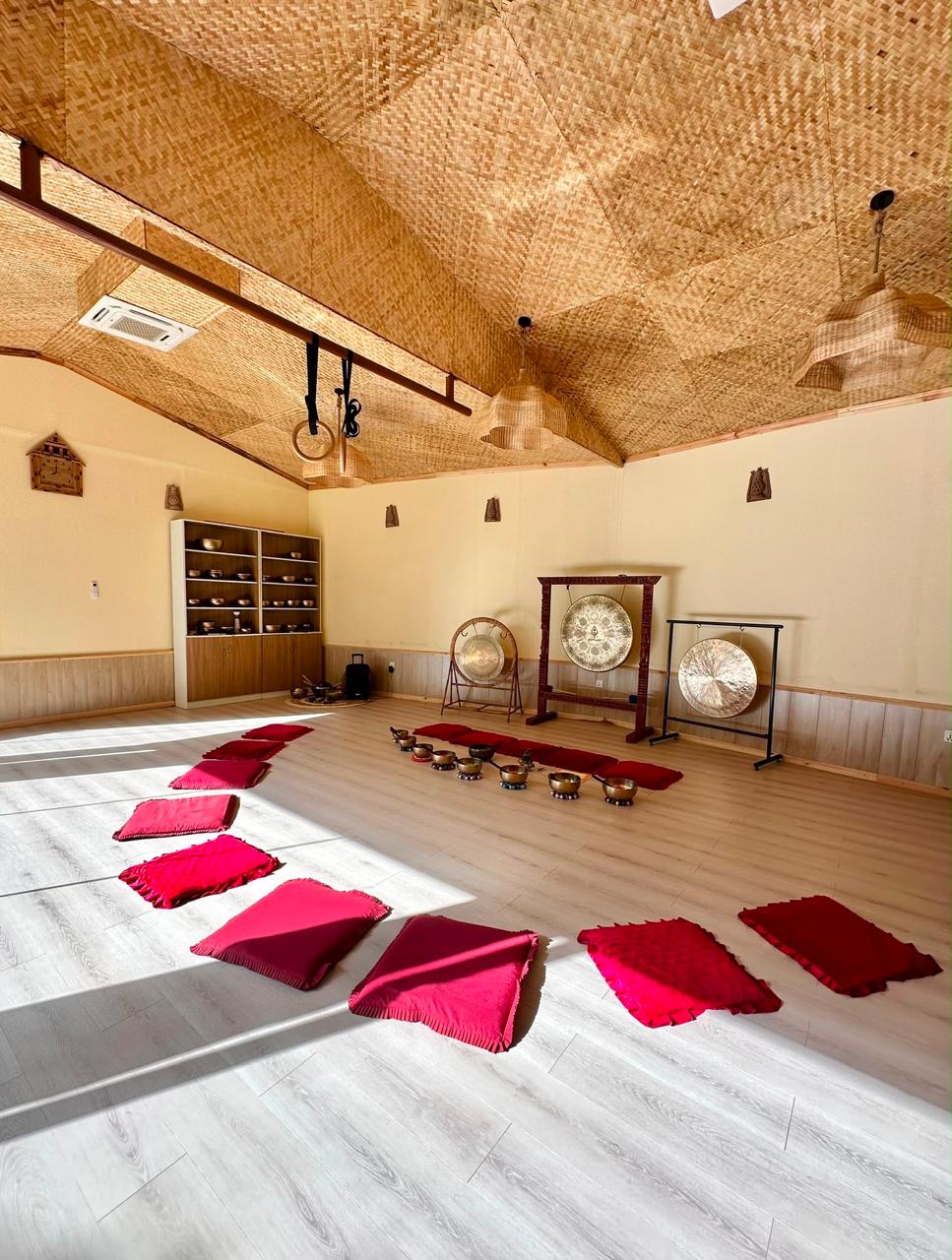
At Himalayan Yoga Academy in Nepal, we believe that understanding the instruments and the traditions behind them is an important part of learning sound healing. This guide explores the seven chakras, their traditional associations, singing bowl frequencies, and practical ways to create a meaningful sound meditation session.
1. Understanding the Connection Between Tibetan Singing Bowls and the Seven Chakras
The relationship between Tibetan singing bowls and chakras brings together two different but complementary areas of traditional and contemporary practice: sound meditation and yogic energy philosophy.
The chakra system comes from Indian spiritual traditions and is an important subject in various schools of yoga and Tantra. The Sanskrit word "chakra" translates as "wheel." In traditional teachings, chakras are described as subtle energy centers associated with different dimensions of human experience.
The seven-chakra model commonly taught in modern yoga and meditation describes centers extending from the base of the spine to the crown of the head.
Tibetan singing bowls, meanwhile, are metal instruments known for their distinctive sounds. When struck or played around the rim with a mallet, they produce a combination of tones and overtones. Each bowl has its own acoustic personality, influenced by its size, shape, thickness, composition, and craftsmanship.
In contemporary chakra sound healing, practitioners bring these two traditions together by associating particular singing bowls with individual chakras.
Three ideas help explain this practice.
Sound and attention: The sustained tones of singing bowls provide a point of focus during meditation. Instead of following every passing thought, participants can gently bring their attention back to the sound.
Vibration and physical awareness: A singing bowl produces physical vibration as well as audible sound. Participants may notice the sound differently depending on their position, distance from the instrument, and sensitivity to sound.
Resonance: In acoustics, resonance describes the response of a vibrating system to particular frequencies. This principle helps explain how musical instruments produce and interact with sound. In chakra meditation, resonance is also used as a traditional interpretive concept.
It is worth making one distinction: the seven chakras have not been established as measurable acoustic structures with scientifically verified healing frequencies. The musical note correspondences used in modern chakra singing bowl sets are a way of organizing sound meditation, rather than a proven medical system.
Understanding this distinction allows practitioners to respect traditional chakra teachings while communicating responsibly about sound healing.
2. The Seven Chakras and Their Singing Bowl Correspondences
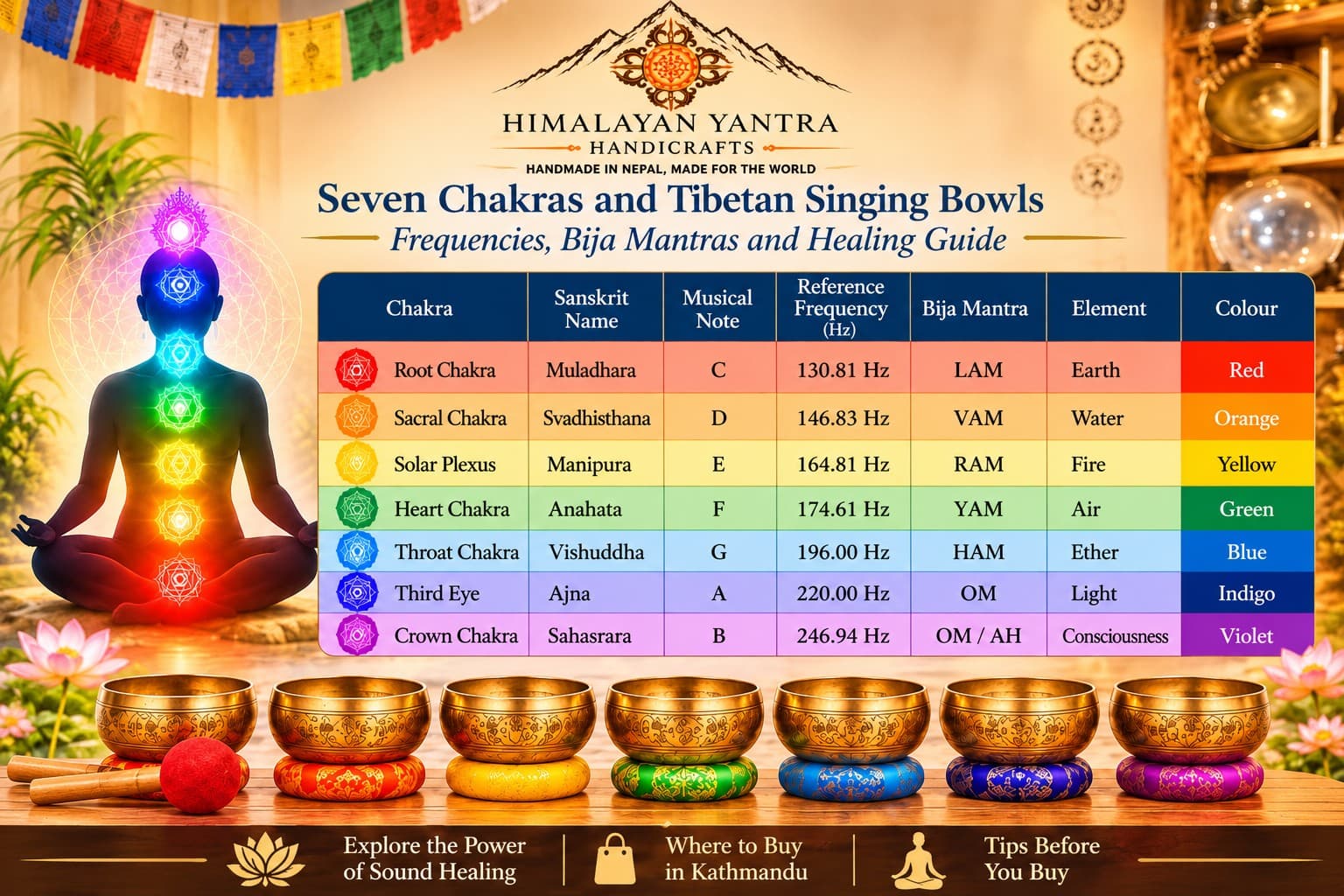
A popular modern approach to chakra sound healing connects the seven chakras with the seven musical notes:
C – D – E – F – G – A – B
Each note is assigned to one chakra, beginning with the root and moving upwards towards the crown.
Here is a closer look at the traditional associations and how singing bowls can be incorporated into each meditation.
1. Root Chakra – Muladhara
<escape>Musical note: C | Bija mantra: LAM | Color: Red | Element: Earth</escape>
The root chakra, known as Muladhara in Sanskrit, is traditionally associated with grounding, stability, security, and our connection with the physical world.
It is located at the base of the spine in the traditional chakra model.
In sound meditation, root chakra work often provides a gentle beginning. Practitioners may choose a singing bowl with a deep, warm, and full-bodied sound to establish a relaxed atmosphere.
Larger singing bowls are frequently used for lower tones, although bowl size alone does not determine its exact musical note.
How to use the bowl:
- Begin with gentle, controlled strikes.
- Give the sound enough time to fade naturally.
- Invite participants to notice their breathing and contact with the ground.
- Introduce the LAM mantra if it suits the session.
Meditation focus: Grounding, stability, and a sense of security.
2. Sacral Chakra – Svadhisthana
<escape>Musical note: D | Bija mantra: VAM | Color: Orange | Element: Water</escape>
The sacral chakra is traditionally connected with creativity, emotional expression, pleasure, and relationships.
Its association with the water element reflects movement, flexibility, and the changing nature of emotions.
For this part of a chakra sound healing session, practitioners may select a bowl with a smooth, flowing tonal quality.
Rather than playing continuously, allow pauses between sounds. Silence gives participants an opportunity to notice their own experience.
How to use the bowl:
- Play the bowl gently and consistently.
- Encourage natural, comfortable breathing.
- Introduce VAM chanting when appropriate.
- Invite participants to observe their feelings without judging them.
Meditation focus: Creativity, emotional awareness, and adaptability.
3. Solar Plexus Chakra—Manipura
<escape>Musical note: E | Bija mantra: RAM | Color: Yellow | Element: Fire</escape>
Manipura, commonly called the solar plexus chakra, represents confidence, determination, personal power, and self-discipline in traditional yogic philosophy.
Its association with fire reflects transformation, energy, and the ability to take purposeful action.
A singing bowl with a clear and balanced tone can complement meditation focused on confidence and personal awareness.
How to use the bowl:
- Introduce the sound with controlled strikes.
- Allow participants to maintain relaxed breathing.
- Use the RAM mantra as a meditation focus.
- Encourage reflection on confidence and personal intentions.
Meditation focus: Confidence, motivation, and inner strength.
4. Heart Chakra—Anahata
<escape>Musical note: F | Bija mantra: YAM | Color: Green | Element: Air</escape>
The heart chakra, known as Anahata, is traditionally associated with compassion, kindness, love, forgiveness, and emotional connection.
It occupies the central position in the seven-chakra model, linking the lower three chakras with the upper three.
For heart-focused meditation, practitioners often choose singing bowls with warm and harmonious tonal qualities.
This stage can also include a short gratitude meditation.
How to use the bowl:
- Play gentle tones at a comfortable volume.
- Invite participants to notice their natural breathing.
- Introduce YAM chanting if appropriate.
- Allow a few moments for reflection on compassion and gratitude.
Meditation focus: Kindness, gratitude, and emotional connection.
5. Throat Chakra – Vishuddha
<escape>Musical note: G | Bija mantra: HAM | Colour: Blue | Element: Ether or Space</escape>
The throat chakra represents communication, listening, and self-expression in traditional chakra philosophy.
Vishuddha is often explored through practices involving chanting, mindful speaking, and attentive listening.
A singing bowl with a clear and sustained sound can provide a useful focus for this meditation.
How to use the bowl:
- Play clear, gentle tones.
- Introduce comfortable humming or HAM chanting.
- Encourage awareness of listening and communication.
- Keep instruments away from direct contact with the throat.
Meditation focus: Expression, communication, and mindful listening.
6. Third Eye Chakra – Ajna
<escape>Musical note: A | Bija mantra: OM | Color: Indigo | Traditional association: Light</escape>
Ajna, or the third eye chakra, is traditionally associated with intuition, concentration, insight, and awareness.
It is commonly included in meditation practices that encourage observation of thoughts and focused attention.
A singing bowl with a clear, sustained tone can help create a quiet environment for this stage.
How to use the bowl:
- Play the bowl gently.
- Allow sufficient space between strikes.
- Introduce OM chanting if appropriate.
- Encourage participants to observe their thoughts without trying to control them.
Meditation focus: Awareness, concentration, and clarity.
7. Crown Chakra – Sahasrara
<escape>Musical note: B | Bija mantra: OM or AH, depending on the tradition | Color: Violet or White</escape>
The crown chakra, known as Sahasrara, represents spiritual awareness, consciousness, and the experience of connection with something greater than oneself.
In meditation, it is often associated with silence, contemplation, and spiritual development.
Practitioners may use a singing bowl with a clear, sustained, and gentle tone during the final stage of a seven-chakra session.
How to use the bowl:
- Introduce the sound gently.
- Avoid placing instruments directly on the head.
- Allow the tone to fade completely.
- Finish with a period of silence and quiet reflection.
Meditation focus: Stillness, contemplation and spiritual awareness.
3. Seven Chakra Singing Bowl Frequencies: The Complete Reference Chart
One of the most common questions from people interested in chakra sound healing is: What frequency belongs to each chakra?
In the popular C-to-B correspondence system, each chakra is assigned one of the seven musical notes.
The following chart shows the commonly used arrangement, with reference frequencies based on the fourth musical octave and standard A4 = 440 Hz tuning.
| Chakra | Sanskrit Name | Musical Note | Reference Frequency | Bija Mantra |
| Root | Muladhara | C4 | 130.81 Hz | LAM |
| Sacral | Svadhisthana | D4 | 146.83 Hz | VAM |
| Solar Plexus | Manipura | E4 | 164.81 Hz | RAM |
| Heart | Anahata | F4 | 174.61 Hz | YAM |
| Throat | Vishuddha | G4 | 196.00 Hz | HAM |
| Third Eye | Ajna | A4 | 220.00 Hz | OM |
| Crown | Sahasrara | B4 | 246.94 Hz | OM / AH |
Are These the Exact Healing Frequencies of the Chakras?
No. These figures represent standard musical reference pitches, not scientifically established healing frequencies for the chakras.
A singing bowl does not necessarily produce only one frequency. Its sound can contain a fundamental tone and multiple overtones, and the prominent frequencies can vary depending on how the instrument is played.
For example, a bowl that is associated with the C note may produce additional tones that are not part of the simple C4 reference pitch.
When choosing a seven-bowl singing bowl set, practitioners should therefore consider the complete sound of each instrument rather than relying on a single number.
A tuner or frequency analyser can help identify prominent pitches, but listening to the instrument is equally important.
The best selection process combines acoustic testing, craftsmanship, sound quality and practical experience.
4. What Are Sanskrit Bija Mantras? Understanding Their Role in Chakra Sound Healing
Bija mantras are sacred seed syllables used in Indian spiritual and yogic traditions.
The Sanskrit word bija means seed. These short sounds are used in chanting, meditation and traditional chakra practices.
Each of the seven chakras is commonly associated with a particular bija mantra.
The familiar sequence is:
| Chakra | Sanskrit Name | Bija Mantra |
| Root | Muladhara | LAM |
| Sacral | Svadhisthana | VAM |
| Solar Plexus | Manipura | RAM |
| Heart | Anahata | YAM |
| Throat | Vishuddha | HAM |
| Third Eye | Ajna | OM |
| Crown | Sahasrara | OM or AH |
How Do You Combine Mantra Chanting with Singing Bowls?
The combination of singing bowls and bija mantra chanting is a natural addition to many meditation sessions.
For example, during heart chakra meditation, a practitioner may play the bowl associated with the F note while introducing the YAM mantra.
The practitioner can invite participants to chant at a comfortable pitch without forcing their voices to match the bowl's exact frequency.
This creates a meditation experience involving:
- Listening to instrumental sound.
- Exploring natural vocal vibration.
- Developing breathing awareness.
- Repeating traditional mantra syllables.
- Maintaining focused attention.
For yoga teachers and sound healing facilitators, this combination offers another way to make group meditation more interactive.
It is not necessary to make exaggerated claims about energy activation. The value of the practice can be explored through traditional meaning, personal experience and mindful attention.
5. Why Do Practitioners Follow a Root-to-Crown Chakra Sequence?
If you attend a seven-chakra singing bowl session, you will often notice that the practitioner begins with the root chakra and gradually moves towards the crown.
This is known as the bottom-up approach.
The sequence follows the traditional arrangement of the seven chakras and creates a logical structure for meditation.
The progression generally looks like this:
- Root: Establishing grounding and stability.
- Sacral: Exploring creativity and emotional awareness.
- Solar Plexus: Reflecting on confidence and determination.
- Heart: Developing compassion and connection.
- Throat: Exploring communication and expression.
- Third Eye: Encouraging concentration and awareness.
- Crown: Concluding with contemplation and silence.
Why does this order matter?
For many practitioners, starting with the root chakra provides a gentle introduction before moving towards more reflective themes.
It also makes the session easier to organise, particularly when working with participants who are new to chakra meditation.
However, there is no scientific requirement that all sound healing sessions must follow this exact sequence. An experienced facilitator can adapt the order according to the purpose of the session.
The important skill is knowing how to use the instruments thoughtfully, rather than simply following a fixed sequence.
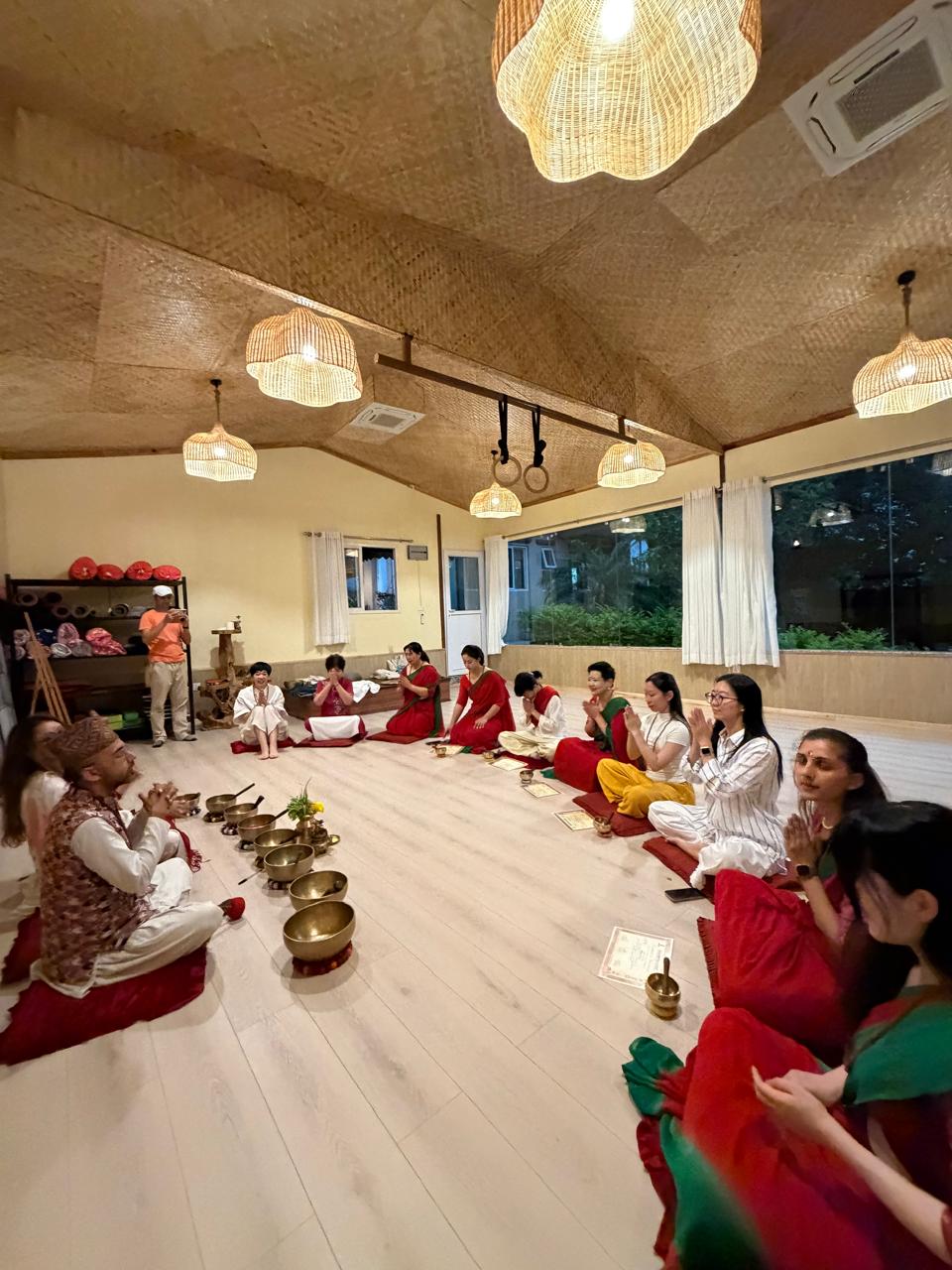
6. How to Conduct a Professional Seven-Chakra Singing Bowl Session
Knowing the seven chakras is only the beginning. Conducting a good sound healing session requires preparation, awareness of sound levels, appropriate timing and an understanding of how participants respond to the experience.
A professional session should feel organised without becoming mechanical.
Here is an example of a 60-minute seven-chakra sound meditation.
Stage 1: Welcome and Preparation – 5 Minutes
Welcome participants and briefly explain the session.
Invite everyone to sit or lie down comfortably.
Make sure the room is quiet, the instruments are arranged safely and the sound level will remain comfortable.
Explain that participants can change position, move away from an instrument or stop whenever they wish.
Stage 2: Grounding and Root Chakra – 10 Minutes
Begin with the C-associated root chakra bowl.
Use slow, controlled strikes, allowing each sound to fade naturally.
Invite participants to become aware of their breathing and physical contact with the ground.
Introduce the LAM mantra if it is appropriate for the group.
Stage 3: Sacral and Solar Plexus – 10 Minutes
Introduce the D and E bowls.
Move gradually between the two instruments.
Invite participants to explore themes of creativity, emotional awareness and personal confidence.
Avoid playing continuously. Give participants enough silence to notice each sound.
Stage 4: Heart Chakra – 10 Minutes
Introduce the F-associated heart chakra bowl.
Allow participants to settle into the sound.
A short gratitude or compassion meditation can complement this stage.
The aim is to create a gentle, welcoming atmosphere rather than an emotionally intense experience.
Stage 5: Throat, Third Eye and Crown – 15 Minutes
Gradually introduce the G, A and B bowls.
Use comfortable sound levels and leave pauses between the instruments.
Participants may include HAM or OM chanting if they are familiar with the practice.
Stage 6: Silence and Integration – 10 Minutes
Finish the bowl sequence and allow a few minutes of silence.
Invite participants to notice their breathing and surroundings.
Guide them back slowly and give them time before asking them to stand.
A short closing reflection can bring the session to a natural conclusion.
Practitioner tip: This is an example of a meditation structure, not a medically validated treatment protocol. Adjust the timing, sequence and volume according to the group and individual comfort.
7. What Makes a Seven-Bowl Chakra Singing Bowl Set a Good Investment?
A seven-bowl chakra singing bowl set is a popular choice among yoga teachers, sound healing practitioners and wellness centres because it offers several instruments within one organised collection.
However, the value of a set is not simply the number of bowls it contains.
The quality of the instruments and how they are used make a much greater difference to the overall experience.
Here are some common applications.
Individual sound meditation: Different bowls can be selected for focused listening and relaxation sessions.
Group sound baths: A seven-bowl collection provides a useful range of tones for group meditation.
Yoga classes: Singing bowls can complement Hatha Yoga, restorative yoga, meditation and final relaxation.
Retreat programmes: Sound meditation can be incorporated into yoga retreats, meditation holidays and wellness programmes.
Corporate wellness: Gentle sound meditation can form part of workplace mindfulness and relaxation activities.
Personal practice: A seven-bowl set can be used at home as part of a regular meditation routine.
For someone starting a sound healing practice, a carefully selected seven-bowl collection can be a useful foundation. Experienced practitioners and larger studios may eventually want additional instruments to expand their sound selection.
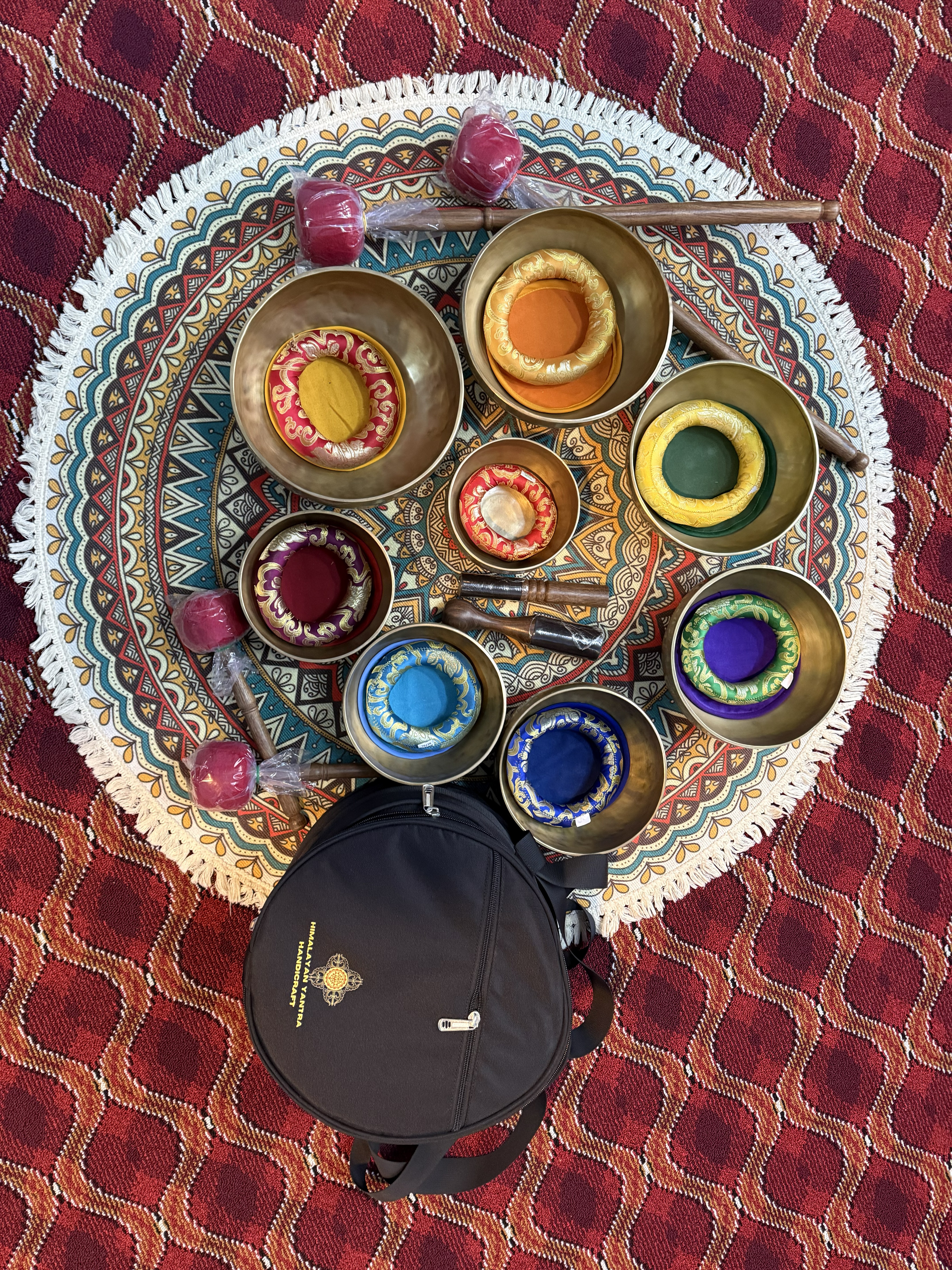
8. How to Choose the Best Professional Seven-Bowl Tibetan Singing Bowl Set
Buying a seven-bowl chakra set requires more consideration than choosing seven bowls based on their appearance or the labels attached to them.
If you are investing in a set for professional use, take time to understand its sound characteristics.
Check the Musical Notes
Ask whether the bowls have been individually tested.
A tuner or frequency analyser can help identify prominent notes, although a bowl's full acoustic character is more complex than a single pitch reading.
Listen to the Overtones
A singing bowl's character comes from the combination of its fundamental tone and additional overtones.
Listen for a pleasant, clear and sustained sound.
Test the Bowls Together
A collection may sound pleasant individually but produce an unpleasant combination when played together.
Listen to the full set and consider whether the tones suit your preferred meditation style.
Consider Size and Craftsmanship
Inspect the thickness, shape, weight, finish and stability of each bowl.
Handcrafted bowls may have natural variations, and these can contribute to their individual acoustic character.
Request a Demonstration
Whenever possible, ask for recordings of each bowl and a demonstration of the complete set.
This helps you make an informed decision before purchasing.
Think About Your Intended Use
A personal meditation set may have different requirements from a collection used in a yoga studio, retreat centre or professional sound healing practice.
Choose instruments that suit your experience, budget and intended audience.
9. Tibetan Metal Singing Bowls vs Crystal Singing Bowls: Which Is Better for Chakra Work?
Both Tibetan metal singing bowls and crystal singing bowls are used in contemporary sound meditation.
They are different instruments, and understanding their characteristics can help practitioners decide which to use.
Tibetan Metal Singing Bowls
Traditional metal singing bowls are known for their layered sounds and varied overtones.
They are commonly used for:
- Personal meditation.
- Chakra-focused sound sessions.
- Yoga relaxation.
- Group sound baths.
- Mantra meditation.
Their individual sound characteristics can vary considerably from one bowl to another.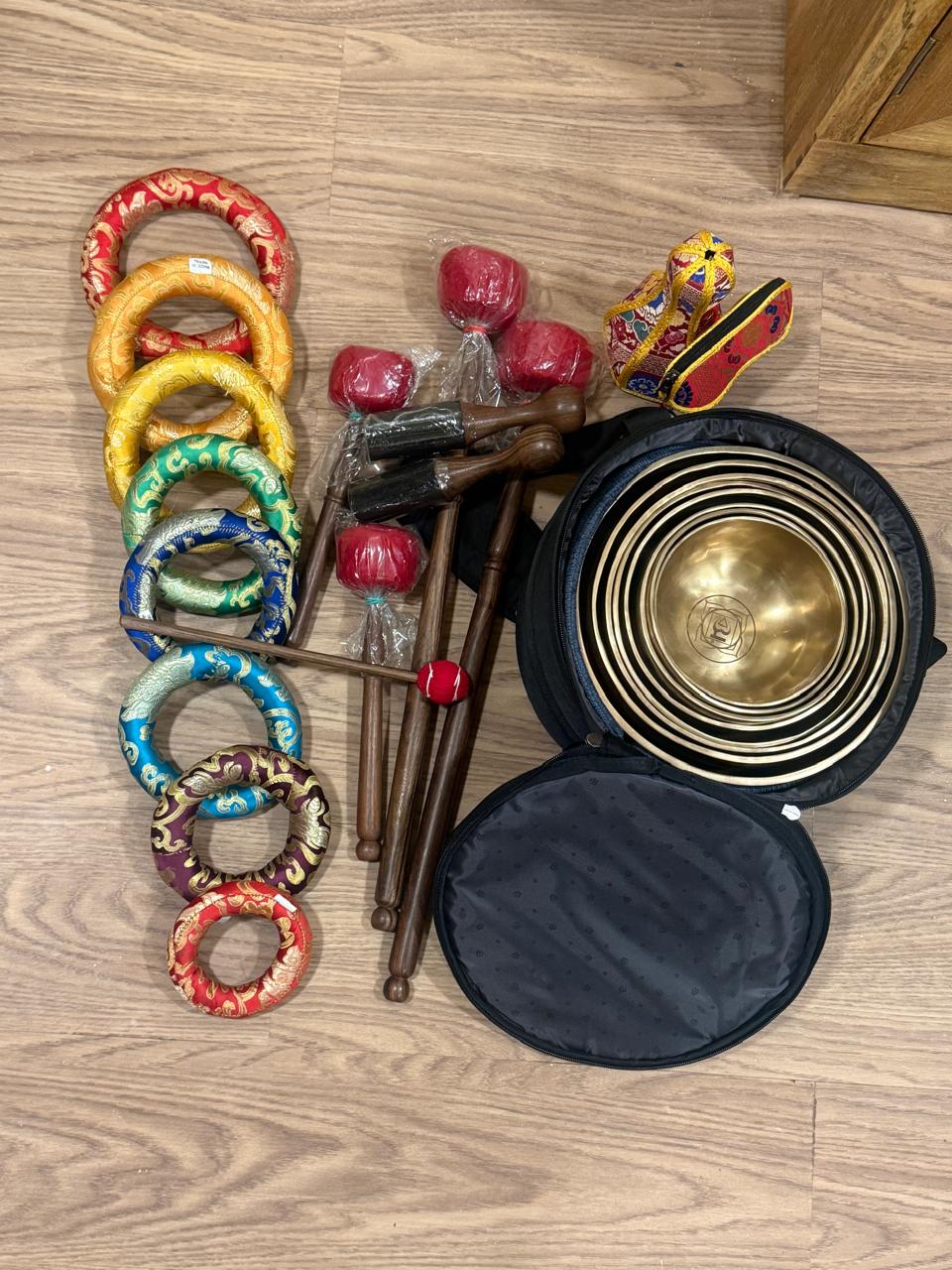
Crystal Singing Bowls
Crystal singing bowls are generally made from quartz-based materials.
They often produce clear and sustained tones, and many are manufactured to specific musical pitches.
They are commonly used for:
- Group sound baths.
- Meditation sessions.
- Relaxation practices.
- Chakra-themed sound meditation.
- Wellness programmes.
Can You Combine Both?
Yes. Many contemporary practitioners use metal and crystal singing bowls together.
For example, metal bowls can introduce complex layers of sound, while crystal bowls can provide sustained tonal elements.
The choice depends on the atmosphere the practitioner wants to create and the comfort of the participants.
Neither instrument is automatically better. Understanding their differences is more useful than assuming one type is suitable for every situation.
10. Can Singing Bowls Balance or Heal the Seven Chakras?
This question deserves an honest answer.
In traditional chakra philosophy, balancing the chakras refers to harmony within the subtle energy system.
Singing bowls are used as meditation instruments to support relaxation, focused listening and self-awareness.
Many participants describe feeling relaxed or more attentive after a sound meditation session. Others enjoy the experience because it provides a quiet break from daily responsibilities.
There is growing research interest in music, meditation, relaxation and the nervous system. However, current evidence does not establish that a particular singing bowl frequency directly opens, balances or medically heals an individual chakra.
It is more accurate to describe chakra sound healing as a complementary meditation and wellness practice.
Responsible practitioners should avoid promising cures or presenting chakra correspondences as established medical facts.
They should also consider sound sensitivity, hearing conditions and individual comfort.
The purpose is to create a safe environment for meditation, not to overwhelm participants with loud or continuous sound.
11. Learn Tibetan Singing Bowl Sound Healing at Himalayan Yoga Academy in Nepal
Nepal offers a meaningful setting for people interested in yoga, meditation and traditional contemplative practices.
At Himalayan Yoga Academy in Kathmandu, sound healing can be explored alongside yoga, pranayama, meditation and broader holistic wellness practices.
Our educational approach brings together traditional perspectives and practical experience with sound instruments.
Students interested in developing their understanding of singing bowls can explore:
- Introduction to Tibetan singing bowls.
- Different types and characteristics of metal singing bowls.
- Correct singing bowl playing techniques.
- Understanding musical notes and acoustic frequencies.
- Fundamental tones and overtones.
- Seven-chakra singing bowl correspondences.
- Sanskrit bija mantras and sound meditation.
- Individual sound relaxation sessions.
- Group sound bath facilitation.
- Integrating singing bowls into yoga and meditation.
- Preparing and conducting structured sound sessions.
Whether you are a yoga teacher, meditation practitioner, wellness professional or beginner, learning about singing bowls can add another dimension to your personal practice and professional development.
Himalayan Yoga Academy welcomes students who wish to explore sound healing in Nepal through practical learning and traditional yogic perspectives.
Explore sound healing training in Nepal with Himalayan Yoga Academy.
Website: https://himalayanyoganepal.com/
WhatsApp: +977 9860831725
Email: himalayanyogainnepal@gmail.com
Frequently Asked Questions About Tibetan Singing Bowls and Chakras
1. What is the connection between Tibetan singing bowls and chakras?
Tibetan singing bowls are used in contemporary chakra sound healing as meditation instruments. Practitioners associate different bowl tones with the seven chakras to organise sound meditation around traditional energetic themes.
2. What are the seven chakra singing bowl notes?
The commonly used modern correspondence is C for the root chakra, D for the sacral chakra, E for the solar plexus, F for the heart, G for the throat, A for the third eye and B for the crown.
3. What frequency is associated with the root chakra?
The root chakra is commonly associated with the musical note C. In standard A4 = 440 Hz tuning, C4 has a reference frequency of approximately 261.63 Hz.
4. What are the seven chakra bija mantras?
The commonly taught sequence is LAM for the root, VAM for the sacral, RAM for the solar plexus, YAM for the heart, HAM for the throat, OM for the third eye and OM or AH for the crown, depending on the tradition.
5. Which singing bowl is best for chakra sound healing?
A seven-bowl singing bowl set is a popular option for practitioners who want to explore all seven chakra correspondences. Individual bowls can also be used for focused meditation.
6. Why do practitioners begin chakra sound healing with the root chakra?
The root chakra represents grounding and stability in traditional chakra philosophy. Starting here creates a structured introduction before moving towards the other chakra meditation themes.
7. Can singing bowls open all seven chakras?
Singing bowls can be used during meditation focused on the seven chakras. However, there is no established scientific evidence that particular bowl frequencies directly open or activate the chakras.
8. What is the difference between Tibetan and crystal singing bowls?
Tibetan singing bowls are traditionally made from metal alloys and produce layered tones and overtones. Crystal singing bowls are generally made from quartz-based materials and often produce clear, sustained sounds.
9. How long should a seven-chakra sound healing session last?
A session can last approximately 20 to 60 minutes, depending on the purpose, group size and participant comfort.
10. Can beginners use a seven-bowl chakra singing bowl set?
Yes. Beginners can use a seven-bowl set for personal meditation and relaxation. Learning correct playing techniques and comfortable sound levels is recommended before conducting sessions for others.
11. Where can I learn singing bowl sound healing in Nepal?
Himalayan Yoga Academy in Kathmandu offers sound healing education and practical training opportunities for people interested in Tibetan singing bowls, meditation and related wellness practices. Visit https://himalayanyoganepal.com/ for further information.
Where to Buy the Best Seven Chakra Singing Bowl Set, Gongs and Sound Healing Instruments in Nepal?
Choosing the right singing bowl set is an important step in developing a meaningful sound healing practice. Whether you are a beginner exploring chakra meditation, a yoga teacher, a professional sound healing practitioner or a wellness centre owner, selecting quality instruments can make a significant difference to your experience.
If you are looking for handcrafted Tibetan singing bowls, seven chakra singing bowl sets, therapeutic gongs and traditional sound healing instruments in Nepal, Himalayan Yantra Handicraft Kathmandu is a destination worth exploring.
Himalayan Yantra Handicrafts – Traditional Sound Healing Instruments, Handmade in Nepal
Himalayan Yantra a renowned Handicraft shop thamel, is dedicated to traditional Nepalese craftsmanship and sound healing instruments. The collection brings together singing bowls, gongs and other instruments used in yoga, meditation, sound baths and holistic wellness practices.
The store offers instruments for personal meditation as well as professional 50 hours Yin yoga training in Nepal, Singing Bowl Training -1,2-3 level, professional gong master training, yoga studios, retreat centres and sound healing schools.
What Can You Find at Himalayan Yantra?
1. Seven Chakra Singing Bowl Sets
Explore seven-bowl chakra collections associated with the musical notes C, D, E, F, G, A and B. These sets are popular among sound healing practitioners who wish to incorporate chakra-focused meditation into their sessions.
When choosing your set, consider the individual bowl tones, overtones, craftsmanship, size and how the seven bowls sound together. If you require a particular octave or frequency range, ask for individual acoustic testing before purchasing.
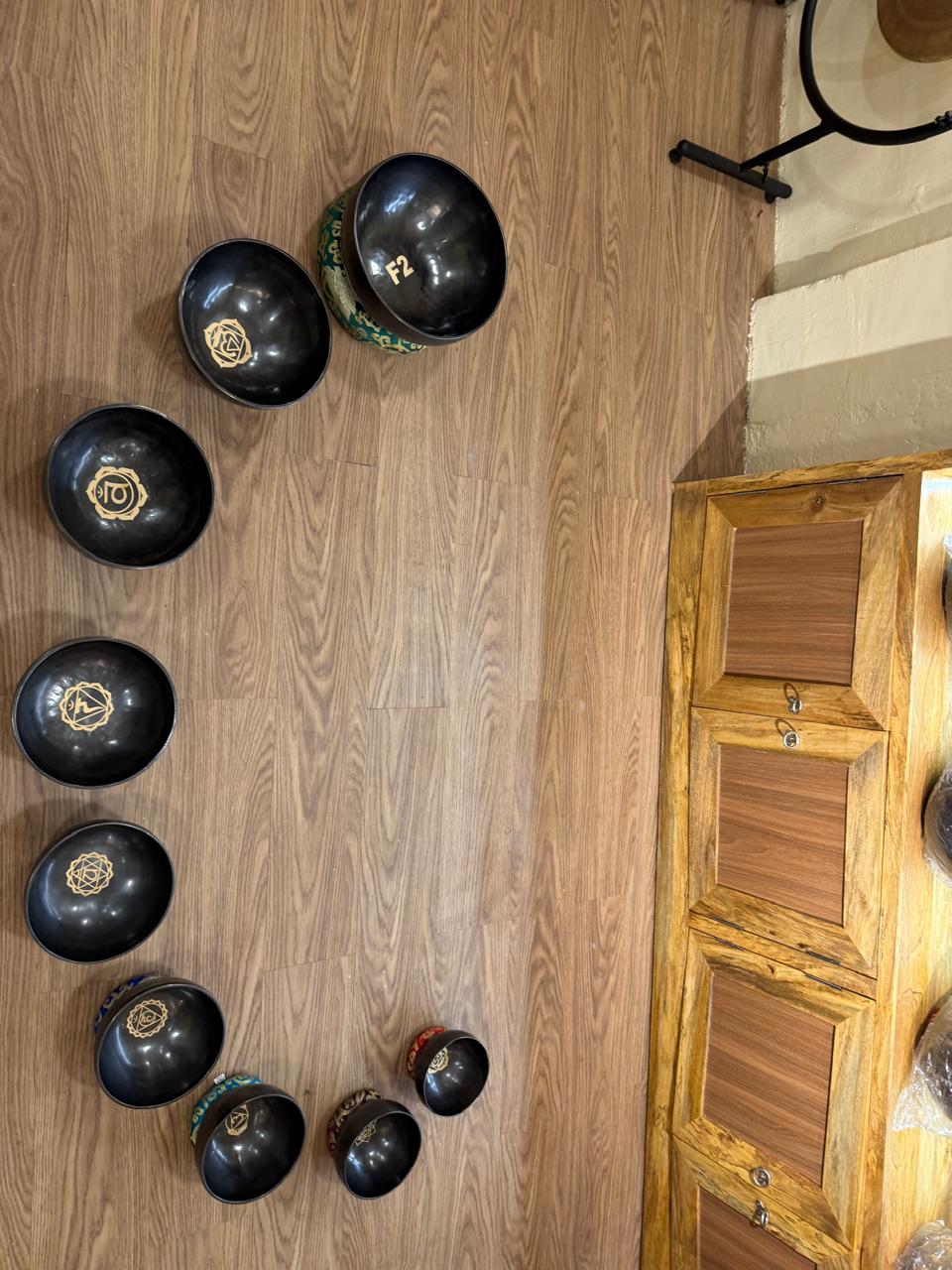
2. Tibetan Singing Bowls
Discover handcrafted metal singing bowls in different sizes, designs and tonal characteristics. They can be incorporated into personal meditation, yoga relaxation, sound baths and professional sound healing sessions.
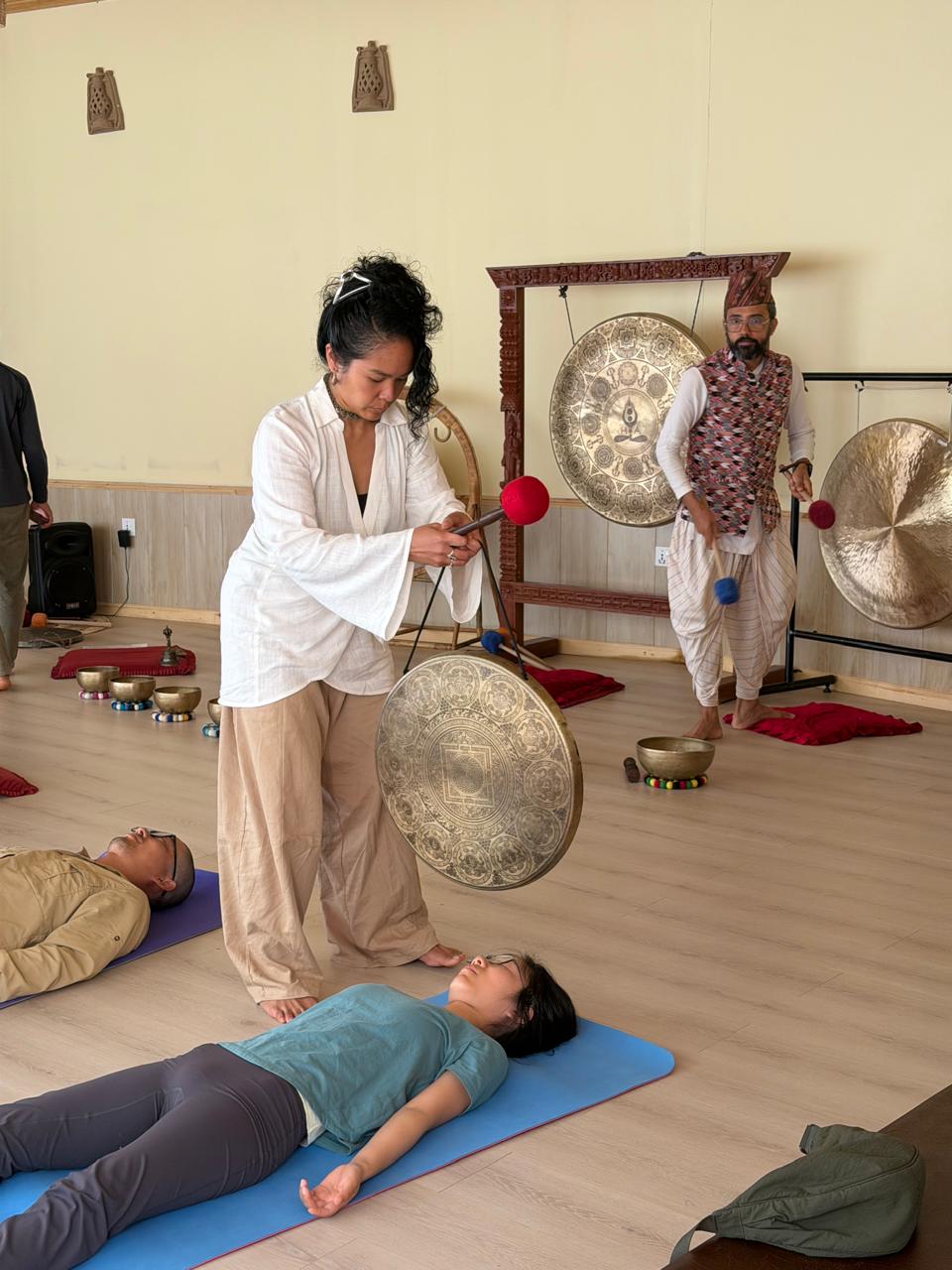
3.Gongs and Tam-Tam Gongs
Gongs are valuable instruments for practitioners interested in exploring a wider range of sound and vibration. Himalayan Yantra offers various price gong options for sound meditation, profiessinal gong training, gong baths, yoga studios and professional sound healing environments.
Explore different gong sizes and tonal characteristics to find an instrument suitable for your practice.
4. Crystal and Chakra Sound Healing Accessories
Build your sound healing collection with complementary instruments and accessories, including traditional bells, tingshas, vajras, gong accessories and other meditation tools.
5. Handcrafted Meditation and Spiritual Instruments
Explore traditional Himalayan instruments and handcrafted products that complement meditation, yoga, spiritual practice and wellness spaces.
How to Choose the Right Sound Healing Instruments
Before purchasing, consider these practical points:
- Sound quality: Listen to the instrument and assess its tone, sustain and overtones.
- Frequency and musical notes: Request testing if you need a particular musical note or octave.
- Craftsmanship: Examine the material, finish, thickness and overall construction.
- Intended purpose: Select instruments according to whether you need them for personal meditation, chakra sessions, group sound baths or professional practice.
- Demonstration: Whenever possible, listen to the instrument before making your final decision.
Explore Himalayan Yantra Handicrafts
Whether you want to purchase your first seven chakra singing bowl set, expand your professional gong collection or discover traditional Himalayan sound healing instruments, Himalayan Yantra Handicrafts welcomes you to explore its collection.
Himalayan Yantra Handicrafts Pvt. Ltd.
Handmade in Nepal, Made for the World
Explore our collections:
- Seven Chakra Singing Bowl Sets
- Tibetan Singing Bowls
- Therapeutic Singing Bowls
- Tam-Tam and Sound Healing Gongs
- Tingsha and Tibetan Bells
- Handpans and Meditation Instruments
- Singing Bowl Accessories
Discover traditional Himalayan craftsmanship and find the right sound healing instruments for your practice at Himalayan Yantra Handicrafts.
Visit our website to explore our collection and contact us for product information, demonstrations and purchasing enquiries.
Final Thoughts: Exploring the Seven Chakras Through Sound
There is something special about taking a moment to listen carefully.
A singing bowl does not require complicated equipment or an elaborate setting. Its sound can become a simple focus for slowing down, observing the breath and spending time in meditation.
When combined with the seven-chakra framework, singing bowls offer practitioners a structured way to explore traditional themes such as grounding, creativity, confidence, compassion, communication, awareness and contemplation.
A seven-bowl chakra singing bowl set can be a useful addition to yoga studios, meditation centres, retreat programmes and personal sound practices.
But the real value of learning this practice goes beyond matching seven bowls with seven notes. It comes from understanding the instruments, developing good playing techniques, respecting traditional knowledge and creating a comfortable environment for participants.
At Himalayan Yoga Academy, we encourage students to approach sound as part of a wider journey of yoga, meditation and self-awareness.
Listen deeply, practise mindfully and discover the world of sound healing in Nepal.