

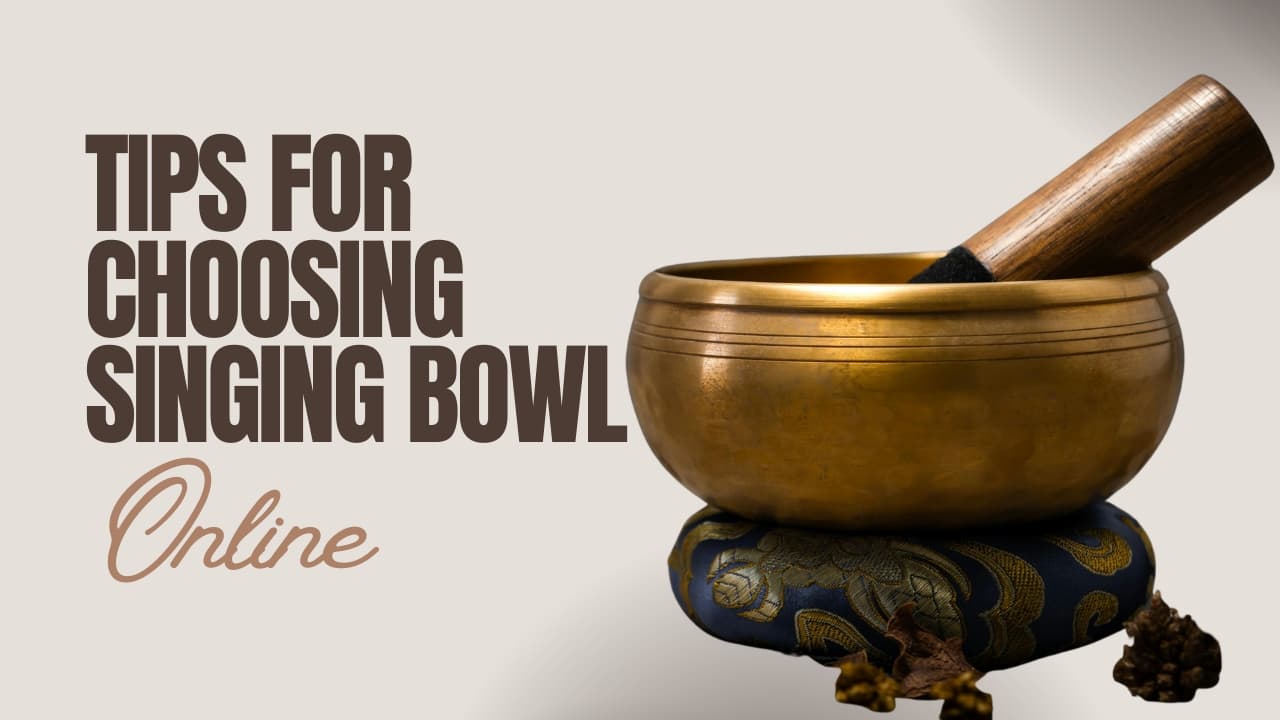
Choosing singing bowl online, focus on sound of the bowl, quality, size, handmade vs, machine made and bowl tune (Pitches)
A modern buyer needs more than an attractive photograph and a spiritual description. How to Choose a Singing Bowl Online without Hearing It in Person is therefore best approached as a practical, evidence-based question rather than a promise with one automatic answer. This 2026 guide brings together product knowledge, online-shopping standards, cultural responsibility, and the real concerns of customers who cannot always examine an item in Nepal before buying it. Himalayan Yantra Handicraft, based in Thamel, Kathmandu, works to connect handmade Nepalese instruments and spiritual crafts with meditators, yoga teachers, sound practitioners, collectors, studios, and responsible travelers around the world. The goal of this article is to make choosing a singing bowl online without hearing it in person easier to understand while avoiding exaggerated medical, historical, or spiritual claims.
Begin with the buyer’s real purpose.
The first step in understanding how to choose a singing bowl online without hearing it in person is to replace vague expectations with a clear use case. A traveling teacher, a home meditator, and a retreat center do not need the same size, accessories, or level of durability. The practical lesson is simple: note where the bowl will be used, who will handle it, and how often it will be moved. The best evaluation combines measurable information with direct observation instead of relying on a single label or promise. At Himalayan Yantra Handicraft, recommendations focus on purpose rather than price, decoration, or trends.
Use measurements instead of vague labels.
When evaluating how to choose a singing bowl online without hearing it in person, separate what can be measured from what must be experienced. Diameter, height, weight, and visible condition can be documented directly. Tone, response, and personal preference require listening or demonstration. Think of it this way: neither category should be replaced with exaggeration. The best evaluation merges measurable information with direct observation instead of relying on a single label or promise.
Listen for character, not only volume.
Sound and physical response provide another layer of evidence. Listen for clarity, balance, sustain, unwanted rattling, and how the instrument responds to both a gentle strike and rim playing. Remember: louder is not automatically better, and a lower pitch is not automatically more professional. The best evaluation merges measurable information with direct observation instead of relying on a single label or promise. The best comparison uses the same room, microphone distance, and mallet whenever possible.
Read the product evidence carefully.
Practical testing should be straightforward and repeatable. Place the bowl on a stable cushion or open palm, use the recommended mallet, and start with light contact. Observe how quickly the sound appears, whether the vibration remains steady, and how the bowl feels in the hand or room. In practice, change only one variable at a time, like mallet type, striking point, or speed. The best evaluation merges measurable information with direct observation instead of relying on a single label or promise.
Compare craftsmanship without romanticizing it.
Common myths can distort decisions about how to choose a singing bowl online without hearing it in person. Claims about guaranteed healing, exact ancient formulas, automatic chakra effects, or undocumented monastery origins should be taken cautiously. Traditional practices can be respected without turning every commercial claim into a fact. For online customers, ask what the seller can actually verify and what is being offered as a modern interpretation. The best evaluation merges measurable information with direct observation instead of relying on a single label or promise.
Understand price in context.
Craft and cultural context deserve careful attention. Handmade objects involve labor, judgment, and learned technique, but the maker should not be reduced to an anonymous symbol of tradition. Good content explains the process, names contributors when permission is granted, and avoids fabricating stories to make a product seem more exotic. The best evaluation merges measurable information with direct observation instead of relying on a single label or promise. Responsible sourcing also considers the continuity of skill, fair commercial relationships, and respect for the communities tied to the work.
Use modern online shopping tools wisely.
Digital tools are helpful when they reduce uncertainty. A zoomable photograph can show surface work, a scale image clarifies size, an uncompressed audio sample aids comparison, and a video demonstrates playing technique. In a professional setting, none of these replace honest written specifications. The best evaluation merges measurable information with direct observation instead of relying on a single label or promise.
Ask the seller practical questions.
Himalayan Yantra Handicraft approaches choosing a singing bowl online without hearing it in person as a Nepal-based specialist store connected with practitioners, teachers, and international customers. The goal is not just to provide another general explanation but to share insights gained from handling individual products, listening to variations, and preparing instruments for real use. Strong articles should include original photographs, product examples, workshop observations, and updates based on customer questions. The best evaluation merges measurable information with direct observation instead of relying on a single label or promise.
How Himalayan Yantra approaches selection.
Before finalizing a decision about how to choose a singing bowl online without hearing it in person, pause and check the basics: the exact product, size, actual sound, included accessories, condition, origin statement, price, packing method, and after-sale support. For that reason, save screenshots or product codes for unique inventory to avoid confusion about what will be shipped. The best evaluation merges measurable information with direct observation instead of relying on a single label or promise. Himalayan Yantra Handicraft can then answer any remaining questions based on the specific item, rather than giving only general advice.
A clear decision checklist.
The long-term view matters. A carefully selected object should remain playable, useful, and supported after the initial excitement of purchase. Keep the product information, note any unique identification number, and learn the basic care routine. Review the choice after several weeks of use and note which qualities became most valuable. The best evaluation merges measurable information with direct observation instead of relying on a single label or promise. This experience can help guide future purchases, whether the next step is a different mallet, a complementary bowl, a ritual object, or a complete professional set.
Conclusion.
Ultimately, choosing a singing bowl online without hearing it in person should lead to a decision that can be explained in clear language. The customer should know what the object is, why it fits the intended use, how its main qualities were evaluated, and what support is available after purchase. Himalayan Yantra Handicraft aims to provide that clarity through individual product information, authentic Nepal-based stories, careful selection, and respectful education. When content and commerce are handled this way, the result is more than a search-engine page; it becomes a useful link between maker, instrument, practice, and owner.