

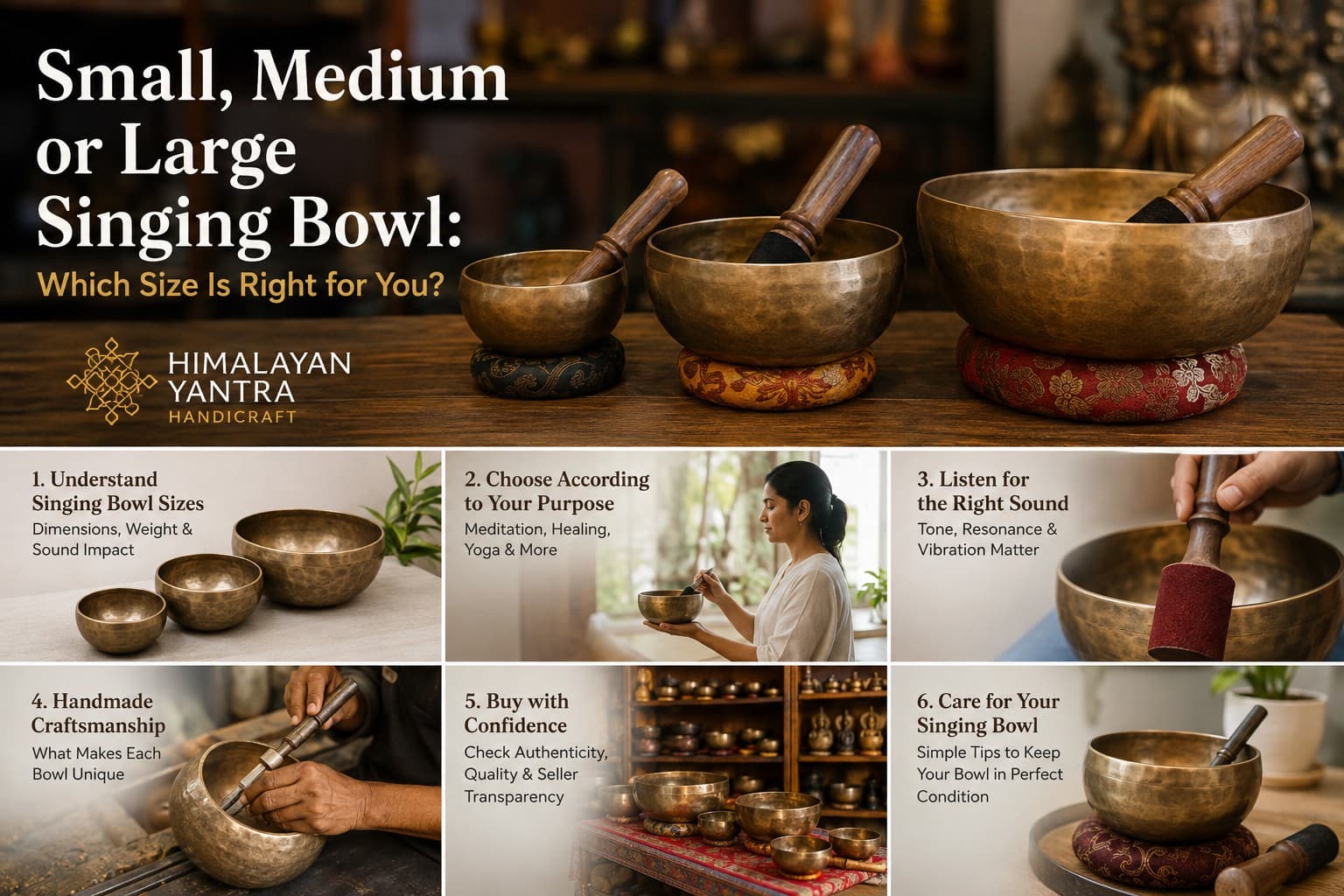
Choosing the right singing bowl size is one of the most important decisions when buying a Himalayan singing bowl. Many buyers assume that bigger bowls always sound better or that smaller bowls are only decorative. In reality, the ideal choice depends on your purpose, playing style, travel needs, meditation practice, sound healing goals, and personal preference.
Whether you're purchasing your first handmade Tibetan singing bowl, upgrading your sound healing equipment, or adding to a professional collection, understanding how size influences sound, weight, portability, and usability will help you make a confident decision.
At Himalayan Yantra Handicraft, located in Thamel, Kathmandu, Nepal, we work directly with experienced Nepalese artisans to provide authentic handmade singing bowls for yoga teachers, meditation practitioners, wellness centers, collectors, musicians, and spiritual practitioners worldwide.
This comprehensive 2026 guide explains the differences between small, medium, and large singing bowls using practical information—not exaggerated spiritual or medical claims.
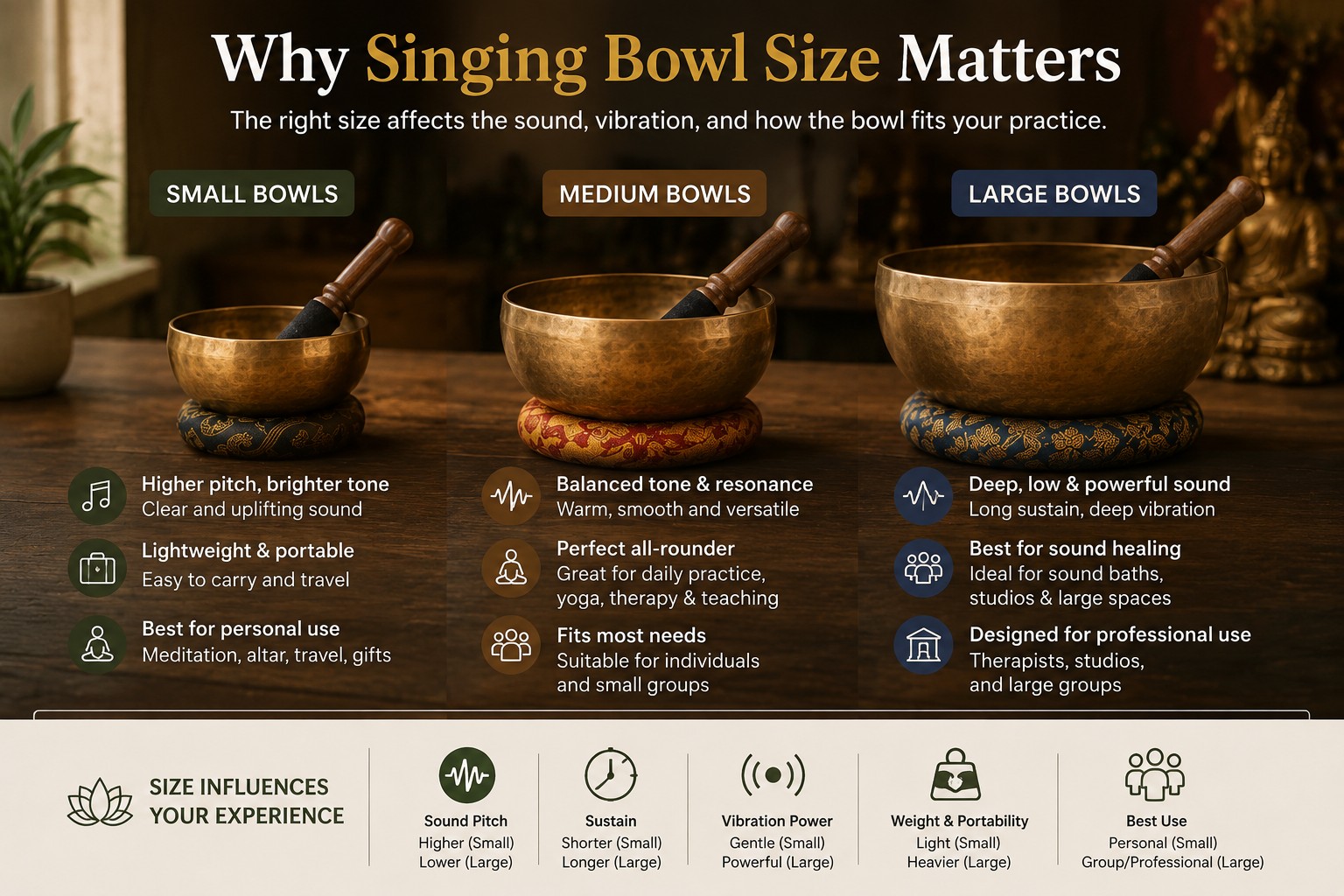
Why Singing Bowl Size Matters
Many online articles suggest there is one "perfect" size, but experienced practitioners know that every bowl serves a different purpose.
The right bowl depends on:
- Meditation practice
- Yoga classes
- Sound healing sessions
- Personal relaxation
- Travel
- Home decoration
- Professional therapy
- Group sound baths
Instead of asking, "Which singing bowl is best?" always go for "Which singing bowl is best for how I will actually use it?" This simple question immediately narrows the options.
Understanding Singing Bowl Sizes
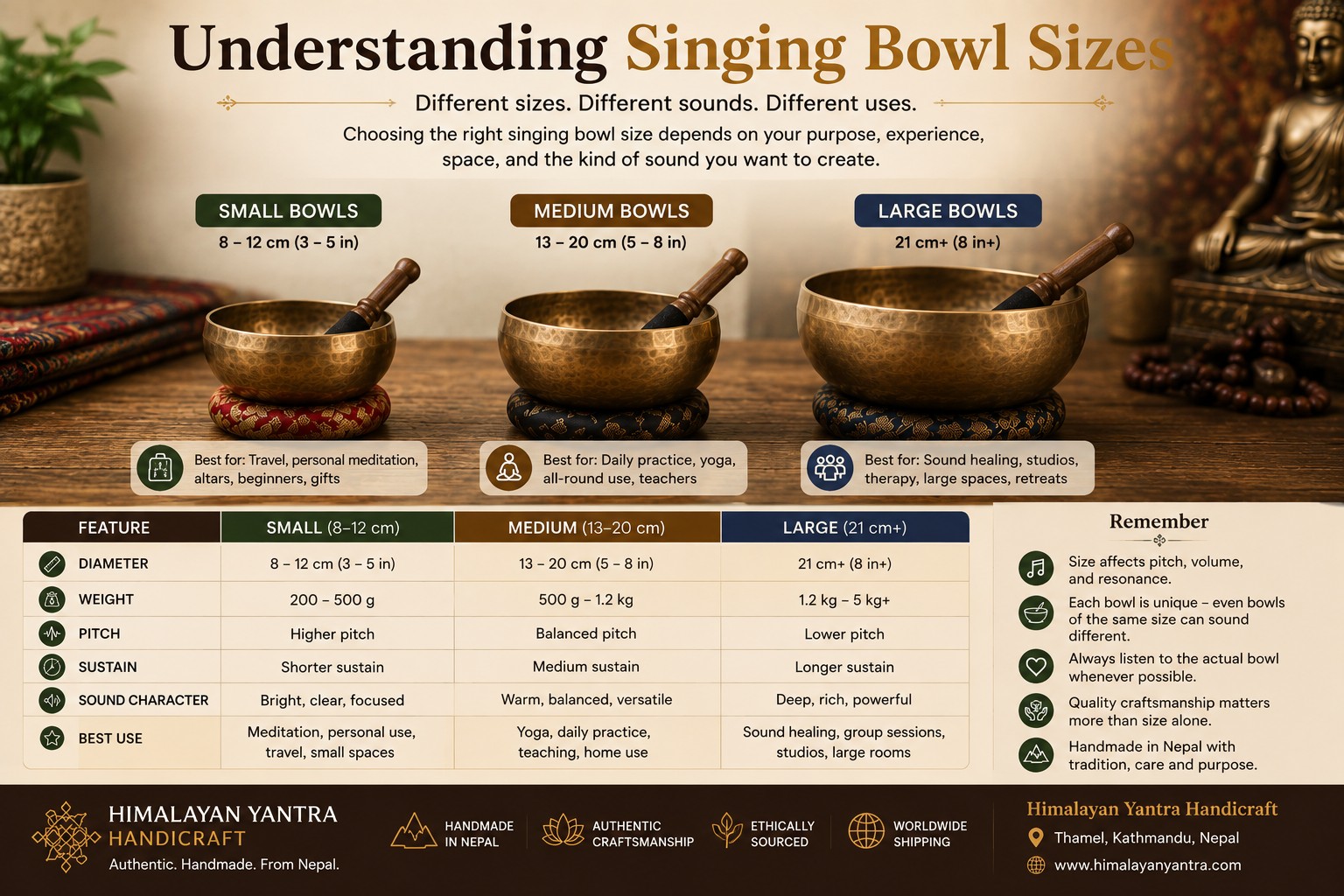
Generally, Himalayan singing bowls fall into three categories.
| Size | Diameter | Weight | Best For |
| Small | 8–12 cm (3–5 in) | 200–500 g | Travel, beginners, altar use |
| Medium | 13–20 cm (5–8 in) | 500–1200 g | Meditation, yoga, daily practice |
| Large | 21 cm+ (8 in+) | 1.2–5 kg+ | Sound healing, studios, therapy |
 Although diameter is useful, it should never be the only measurement.
Also consider:
- Weight
- Wall thickness
- Bowl depth
- Rim shape
- Base design
- Overall balance
These factors influence sound just as much as size.
Small Singing Bowls
Best for Beginners and Travel
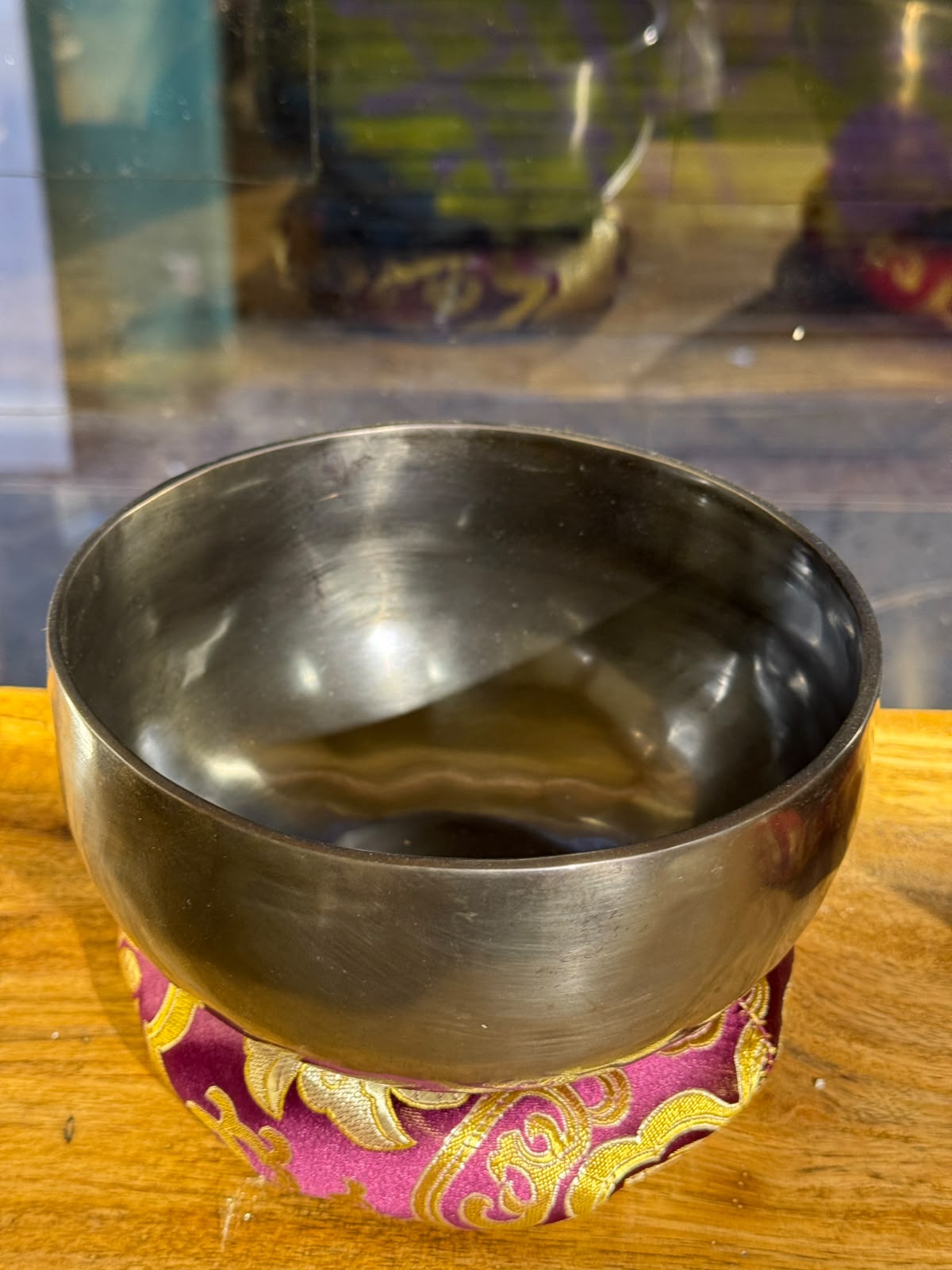
Small bowls are popular because they are lightweight, affordable, and easy to carry.
They work well for:
- Personal meditation
- Home altar
- Mindfulness practice
- Gifts
- Yoga instructors who travel
- Small apartments
Advantages
- Easy to transport
- Lower cost
- Quick response
- Bright sound
- Requires less playing experience
Limitations
Small bowls generally produce the following:
- Higher frequencies
- Shorter sustain
- Less room-filling sound
They may not be suitable for large meditation groups.
Medium Singing Bowls
The Most Versatile Choice
Medium-sized bowls are often considered the best balance between portability and sound quality.
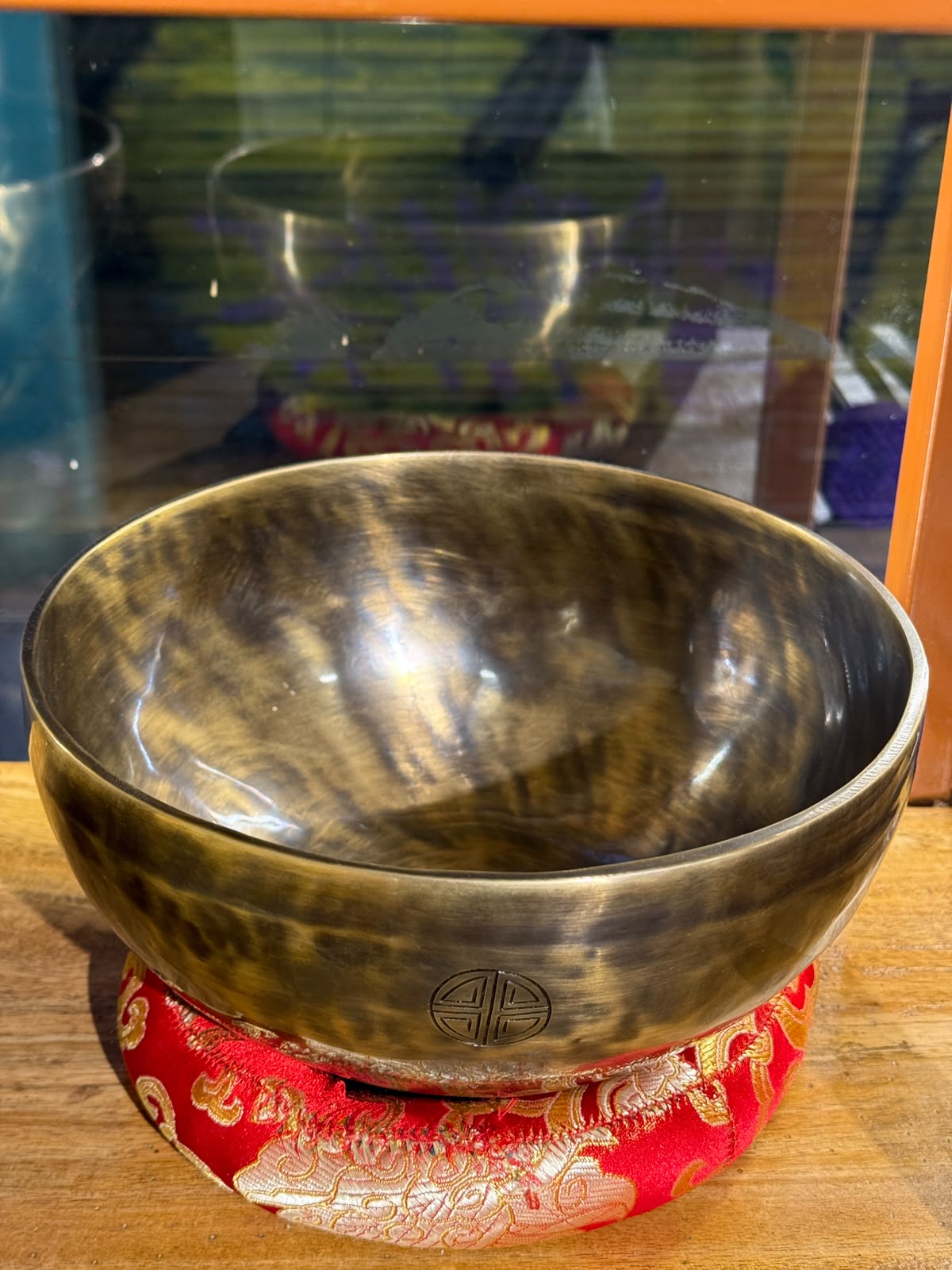
They are suitable for:
- Daily meditation
- Yoga classes
- Reiki practitioners
- Wellness centers
- Personal sound healing
- Professional instructors
Medium bowls usually produce:
- Balanced frequencies
- Comfortable playing
- Good sustain
- Manageable weight
For many customers, a medium bowl becomes the primary bowl used every day.
Large Singing Bowls
Best for Professional Sound Healing
Large bowls create deeper, longer-lasting vibrations.
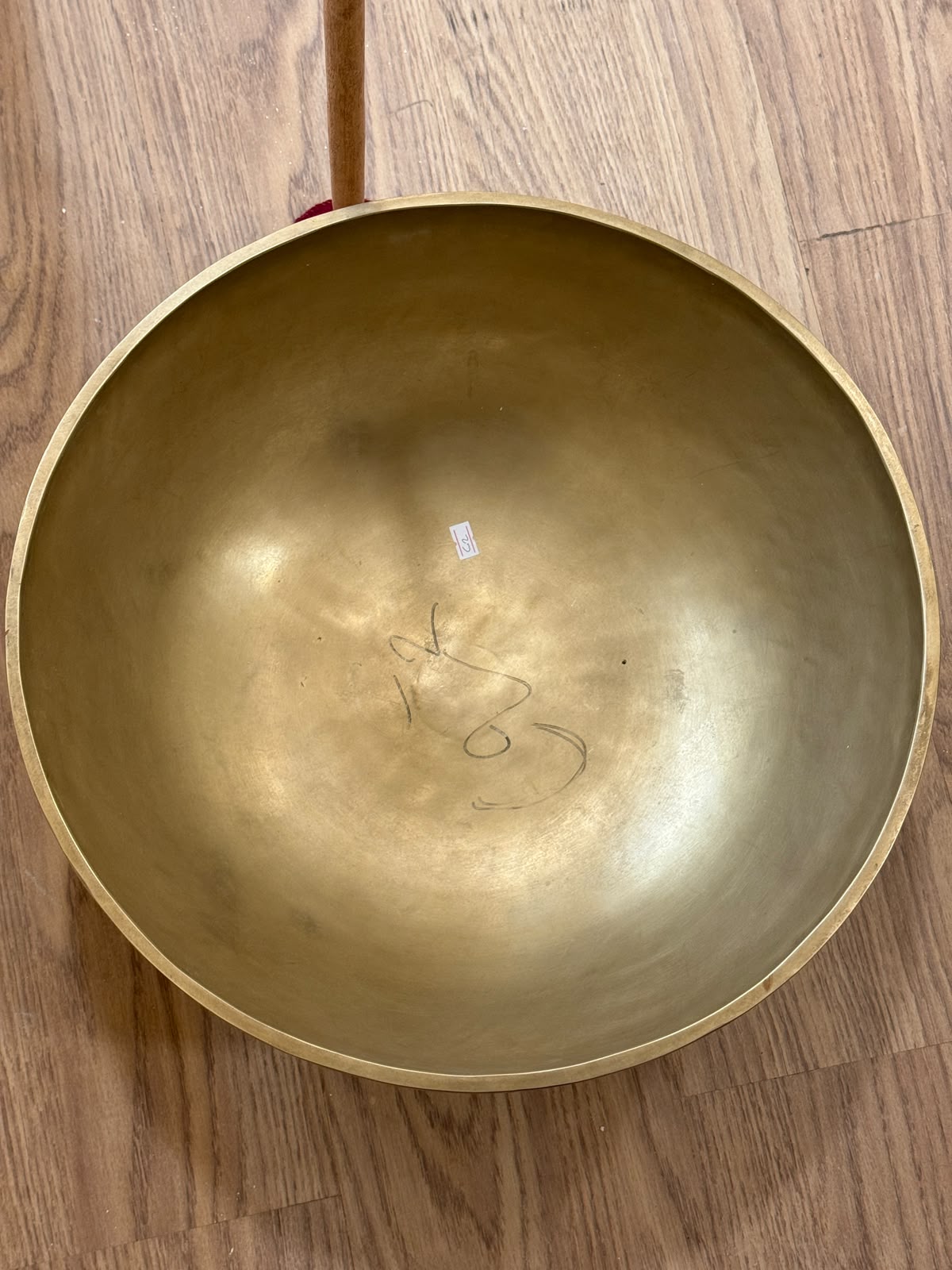
They are commonly used in:
- Sound baths
- Meditation halls
- Yoga studios
- Healing centers
- Retreat facilities
Benefits include:
- Rich resonance
- Long sustain
- Powerful vibration
- Full room projection
However, larger bowls are also
- Heavier
- More expensive
- Less portable
- More difficult to ship internationally
For traveling practitioners, a large bowl may not always be practical.
Diameter vs. Weight: Which Matters More?
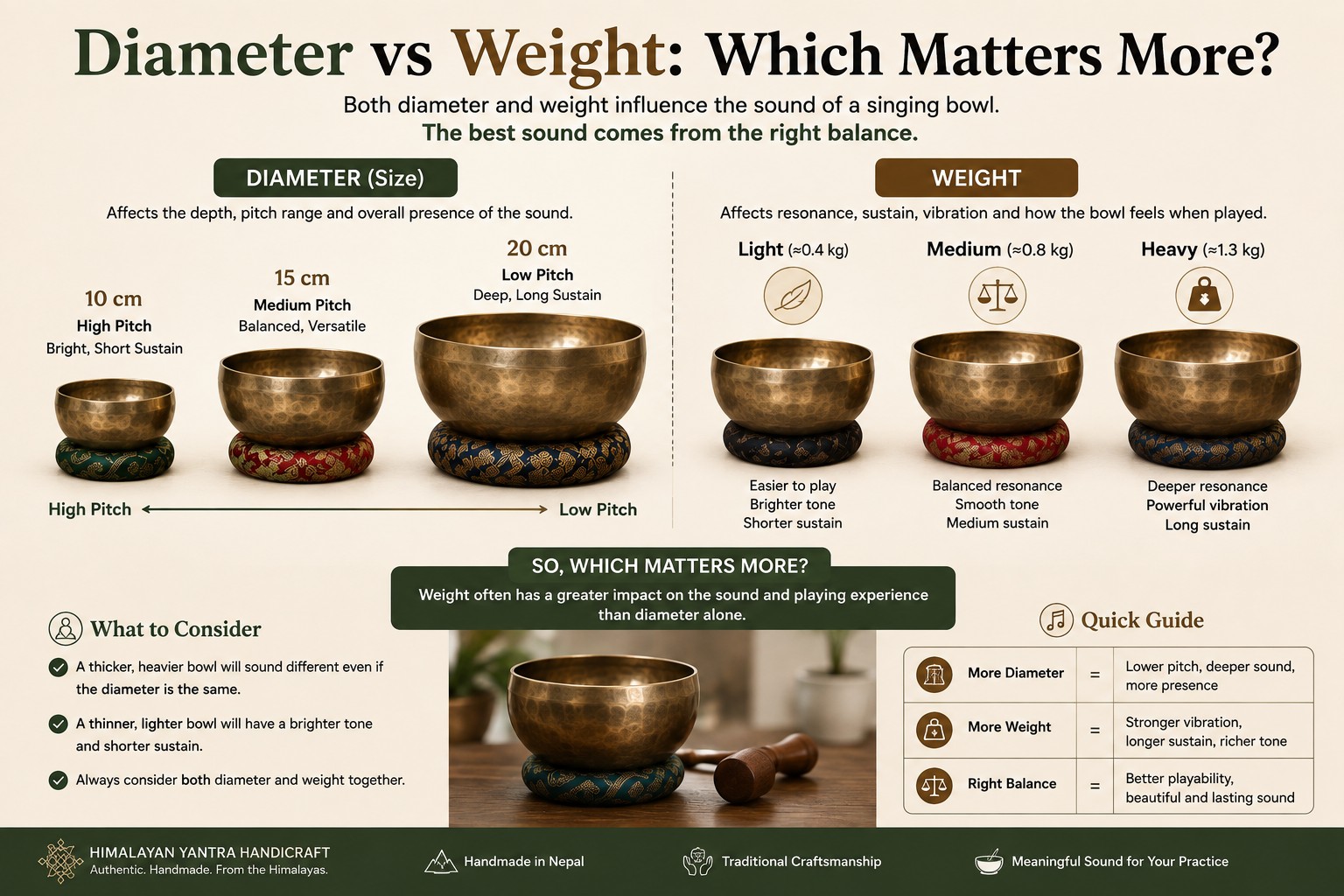
Many buyers focus only on diameter. Experienced bowl players know that weight often influences playing characteristics just as much.
For example:
A thick 16 cm bowl may sound completely different from a thin 16 cm bowl.
Weight affects:
- Sustain
- Resonance
- Ease of striking
- Ease of rim playing
- Overall feel
Always compare diameter together with the following:
- Weight
- Wall thickness
- Bowl profile
Listen to the Sound-Not Just the Specifications
Every handmade singing bowl is unique.
Even bowls made by the same artisan can sound noticeably different.
When buying online, ask for:
- High-quality audio recording
- Video demonstration
- Multiple striking examples
- Rim-playing demonstration
Listen for:
- Clarity
- Sustain
- Smooth transition
- Balanced harmonics
- Comfortable tone
Don't choose only by loudness.
A quieter bowl may actually produce a richer, more pleasant sound.
Handmade Means Every Bowl Is Different
Authentic Himalayan singing bowls are handmade.
That means:
- Slight size variations
- Different hammer marks
- Individual tone
- Unique appearance
- Natural handcrafted character
These are signs of craftsmanship—not manufacturing defects.
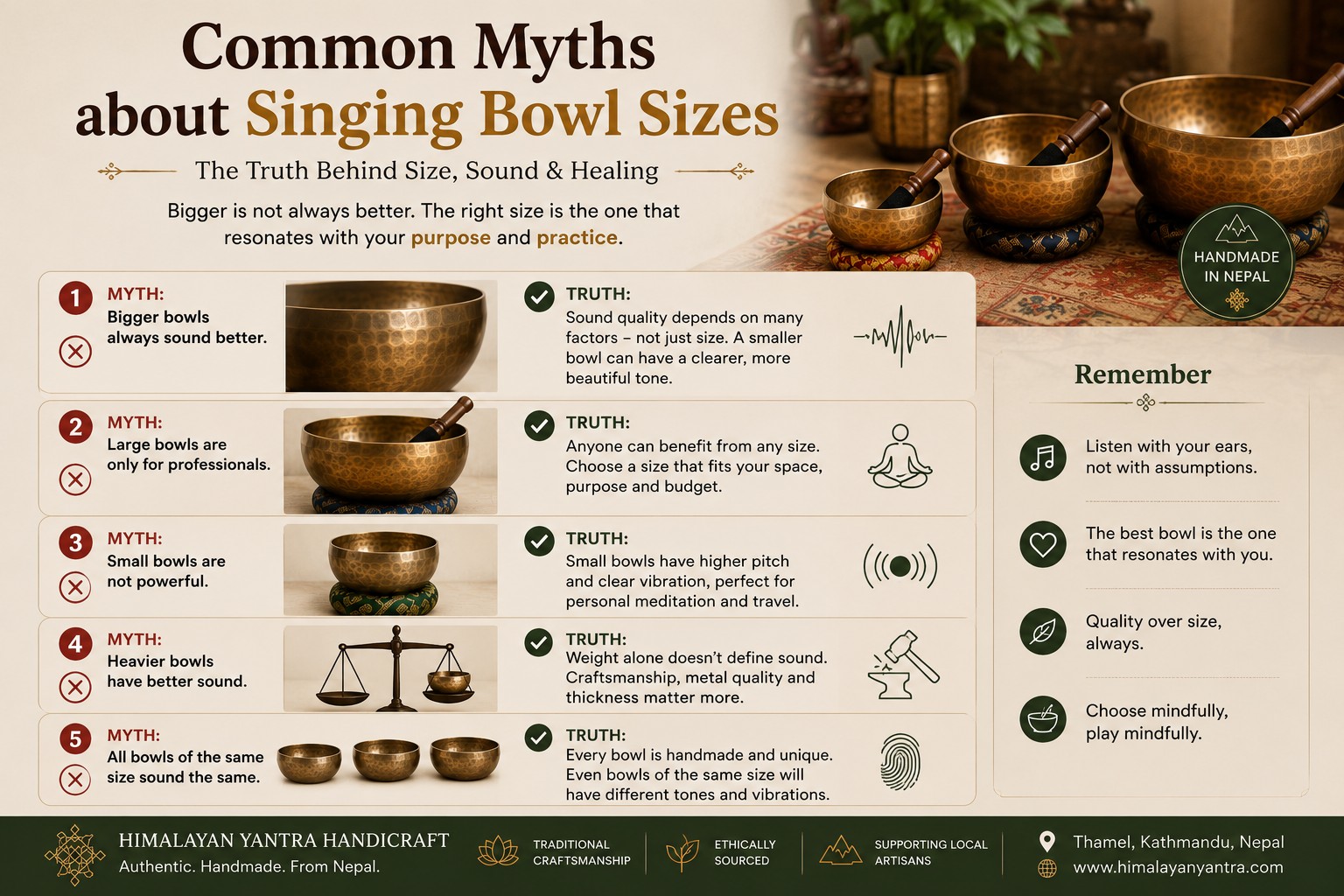
Common Myths about Singing Bowl Sizes
Myth 1: Bigger Bowls Are Always Better
- Not necessarily.
- Large bowls serve specific purposes.
- For personal meditation, a medium bowl may actually be more enjoyable.
Myth 2: Small Bowls Have Poor Sound
- Well-made small bowls often produce incredibly clear, beautiful tones.
Myth 3: One Size Fits Every Practice
- Different activities require different bowls.
- Professional sound therapists often own several sizes rather than relying on just one.
Choosing Based on Your Purpose
Home Meditation
Recommended:
- Medium bowl
Yoga Teacher
Recommended:
Medium bowl
- Portable while offering excellent sound.
Sound Healing Practitioner
Recommended:
- Large bowl or a collection of multiple sizes.
Travel
Recommended:
- Small bowl Easy to pack and carry.
Gift
Recommended:
- Small or medium bowl with cushion and wooden striker.
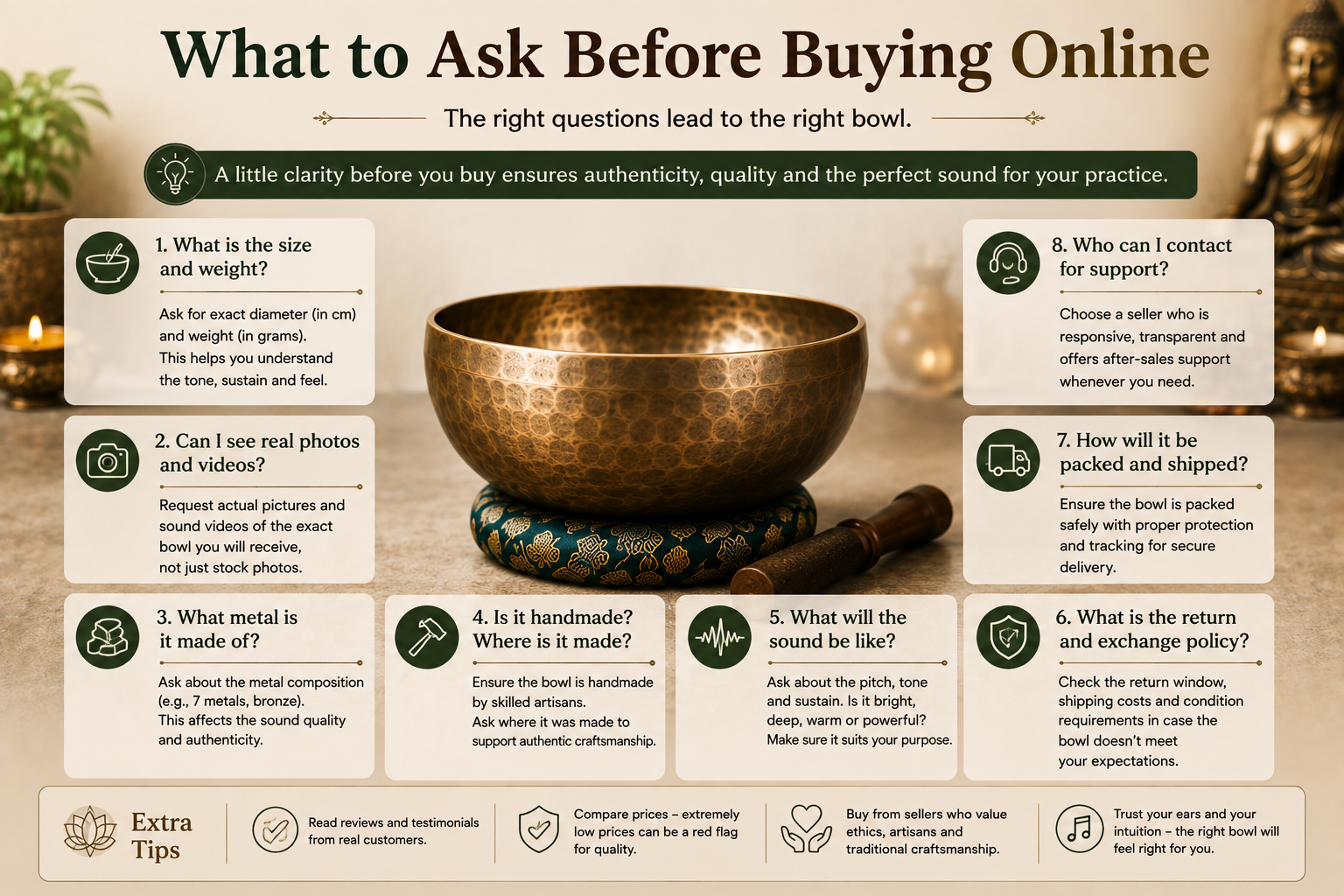
What to Ask Before Buying Online
Before placing an order, verify:
- Exact diameter
- Weight
- Handmade origin
- Audio sample
- Video demonstration
- Accessories included
- Packaging method
- Shipping policy
- Return policy
- Care instructions
Good sellers are transparent.
- Avoid listings with vague descriptions or generic photos.
How Himalayan Yantra Handicraft Helps Customers Choose
At Himalayan Yantra Handicraft, we believe buyers deserve accurate information rather than marketing exaggeration.
Every singing bowl recommendation begins with understanding:
- Your intended use
- Your experience level
- Your preferred sound
- Your travel needs
- Your budget
Whenever possible, we provide:
- Individual product photographs
- Exact measurements
- Actual weight
- Sound recordings
- Playing demonstrations
- Handmade product information
This helps customers choose confidently, even when purchasing internationally.
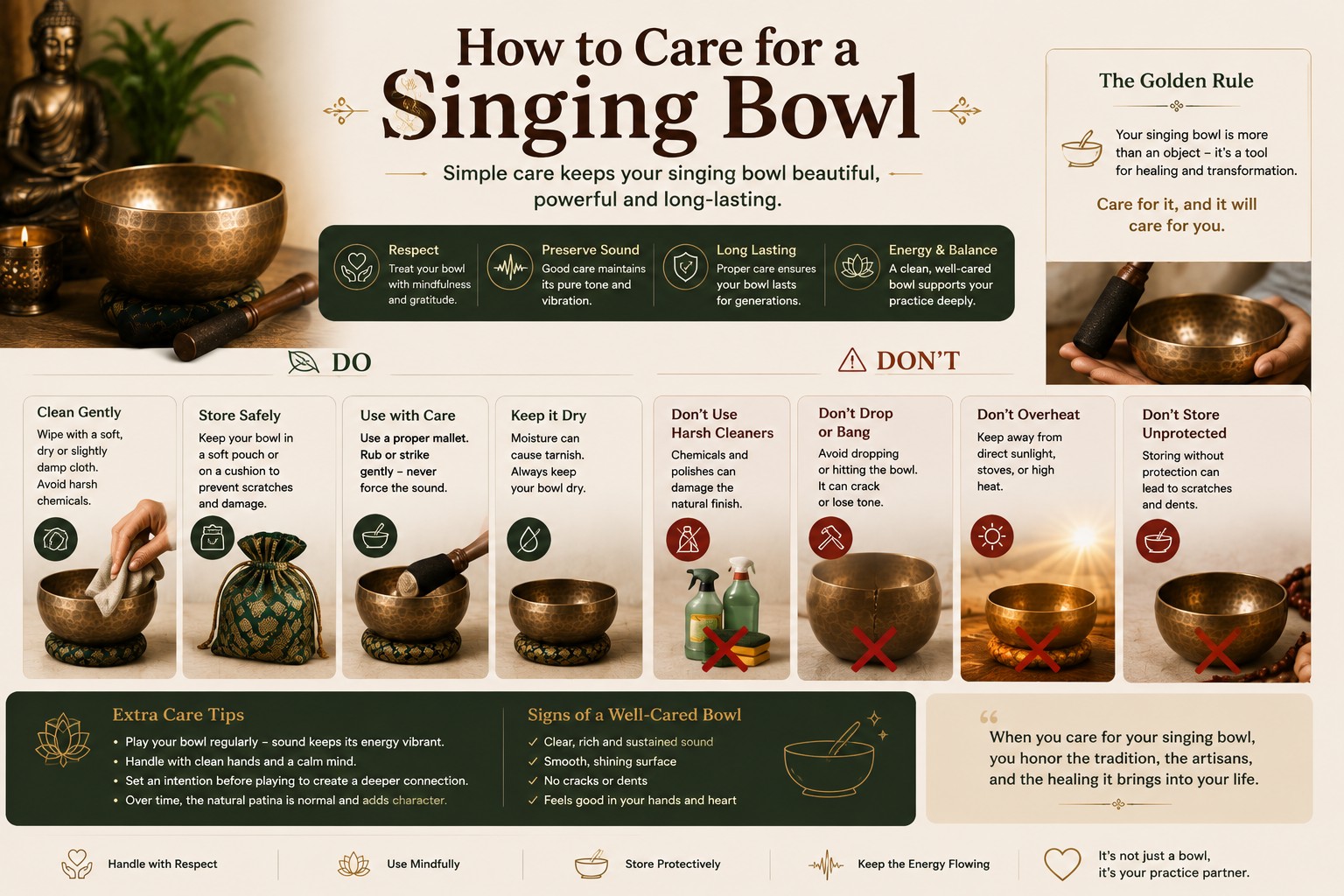
Caring for Your Singing Bowl
A quality handmade singing bowl can last for generations.
Basic care includes:
- Store in a dry place
- Avoid dropping it
- Use an appropriate striker
- Clean gently with a soft cloth
- Keep accessories together
- Transport using protective padding
Proper care preserves both appearance and sound quality.
Quick Buying Checklist
- Before purchasing, ask yourself:
- What will I mainly use the bowl for?
- Will I travel with it?
- Do I prefer deep or bright tones?
- Have I listened to the exact bowl?
- Are the measurements clearly listed?
- Does the seller provide authentic product photos?
- What are accessories included?
- Is after-sales support available?
Answering these questions usually leads to a much better purchase than choosing by appearance alone.
Why Buy from Himalayan Yantra Handicraft?
Located in Thamel, Kathmandu, Himalayan Yantra Handicraft specializes in the best authentic handmade Nepalese singing bowls and traditional spiritual crafts sourced directly from skilled artisans.
What do Himalayan Yantra handicrafts offer to sound healers and buyers?
- Handmade Himalayan Singing Bowls
- Full Moon Singing Bowls
- Chakra Singing Bowl Sets
- Sound Healing Bowls
- Meditation Accessories
- Yoga & Wellness Products
- Professional Guidance
- Worldwide Shipping
- Secure Packaging
- Authentic Nepalese Craftsmanship
Our goal is to connect customers around the world with genuine handcrafted products while supporting responsible sourcing and preserving traditional Nepalese craftsmanship.
Frequently Asked Questions (FAQ)
What is the best-sized singing bowl for beginners?
- A medium-sized singing bowl is often the easiest to play and offers a balanced tone suitable for meditation, yoga, and everyday use.
Are large singing bowls louder?
- Generally yes, but volume depends on craftsmanship, wall thickness, playing technique, and bowl design—not size alone.
Can I travel with a large singing bowl?
- Large bowls are heavier and less convenient for travel. Small or medium bowls are usually better for portable practice.
Does a heavier singing bowl sound better?
- Not necessarily. Weight affects resonance and sustain, but sound quality also depends on craftsmanship and playing technique.
Should I buy based only on diameter?
- No. Consider diameter together with weight, wall thickness, depth, sound recordings, and your intended use
Small, Medium, or Large? Pick the Right Size of Singing Bowl for Healing
Choosing between a small, medium, or large singing bowl should be based on how you plan to use it—not on assumptions that one size is universally better. A thoughtfully selected bowl will feel comfortable to play, suit your environment, and continue to support your practice over time.
Whether you are a beginner, yoga teacher, meditation practitioner, or professional sound healer, taking time to compare dimensions, weight, craftsmanship, and actual sound recordings will lead to a more satisfying purchase.
At Himalayan Yantra Handicraft, we are committed to helping customers make informed decisions through transparent product information, authentic handmade Nepalese craftsmanship, and expert guidance from our team in Thamel, Kathmandu.
What We've Learned After Helping Thousands of Customers Choose Singing Bowls
At Himalayan Yantra in Thamel, Kathmandu, we've noticed that many first-time buyers initially choose the largest bowl because they assume it produces the "best" sound. After speaking with meditation practitioners, yoga teachers, and sound healers from over 20 countries, we've found that medium-sized bowls are often the most versatile choice for everyday practice because they balance portability, sustain, and ease of playing