

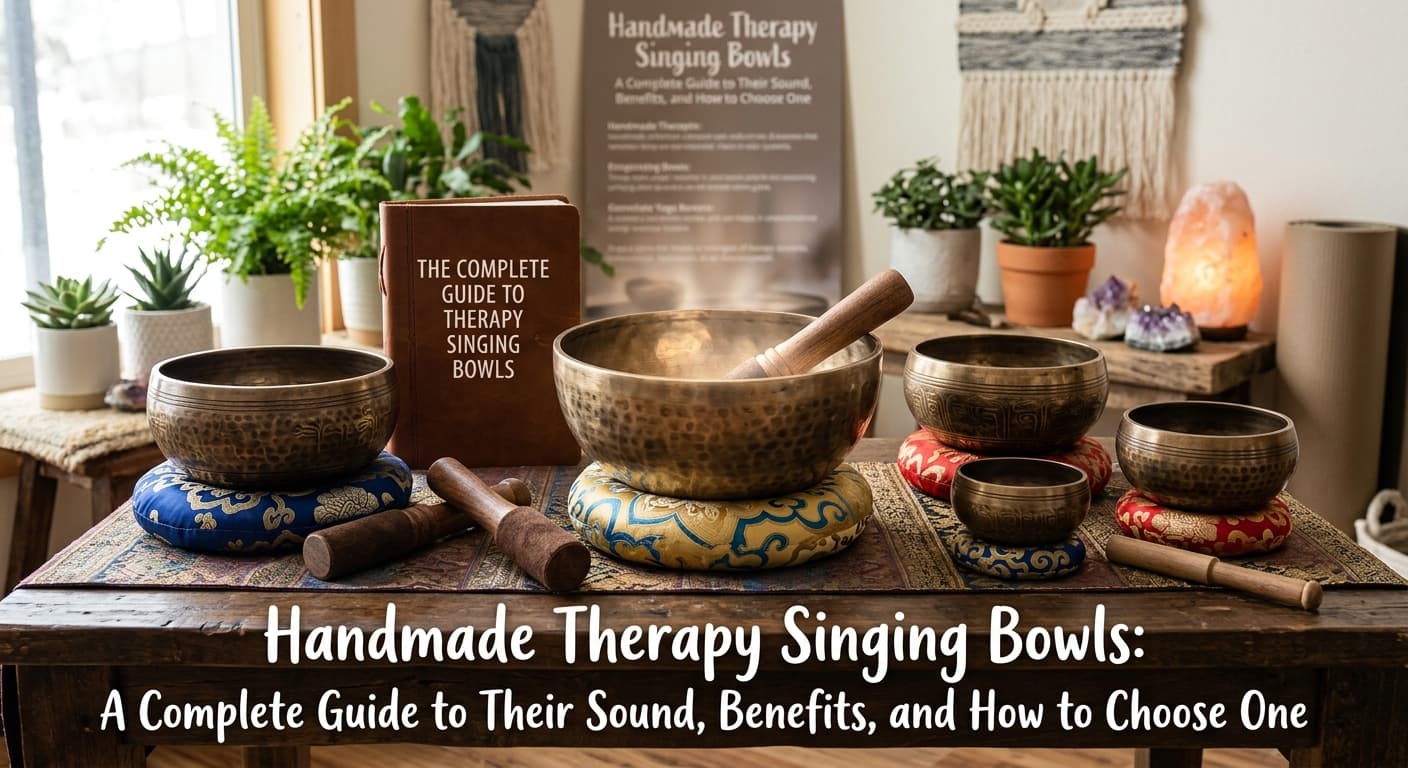
Himalayan handmade therapy singing bowls have become increasingly popular among yoga practitioners, meditation teachers, sound healers, wellness centers, and people seeking a deeper sense of relaxation. Traditionally crafted in the Himalayan region, these unique instruments are valued for their rich tones, long-lasting resonance, and connection to centuries-old metalworking traditions.
Unlike ordinary decorative bowls, a handmade therapy singing bowl is created with sound and vibration in mind. Each bowl can produce a complex combination of fundamental tones, harmonics, and overtones when played with the appropriate mallet or striker.
Whether you are beginning your sound healing journey or looking for a professional singing bowl for therapeutic sessions, understanding how these bowls are made and used can help you make a better choice.
What Is a Handmade Therapy Singing Bowl?
A handmade therapy singing bowl is a traditionally crafted metal bowl designed to produce resonant sounds and vibrations. Skilled artisans shape, hammer, tune, polish, and finish the bowl by hand.
The manufacturing process can influence the bowls:
- Tone and pitch
- Resonance
- Sustain
- Harmonic overtones
- Vibration
- Size and weight
- Playing characteristics
Because handmade bowls are individually crafted, no two bowls are necessarily identical. Small differences in thickness, shape, hammering patterns, and metal composition can contribute to their individual sound.
For sound healing practitioners, this individuality is often part of the appeal.
How Are Handmade Singing Bowls Made?
Traditional Himalayan singing bowls are produced through a combination of metalworking techniques and careful craftsmanship.
The process commonly involves several stages.
1. Selecting the Metal
The artisan begins by selecting suitable metal or metal alloys. Traditional bowls may be made using combinations of metals, while contemporary handmade bowls can use different compositions depending on the intended sound and design.
2. Heating and Shaping
The metal is heated and shaped into a bowl form. Depending on the traditional or modern production method, artisans may use casting, hammering, or a combination of techniques.
3. Hand Hammering
Hand hammering is one of the most recognizable features of traditionally crafted Himalayan singing bowls. Repeated hammering helps shape the bowl and can contribute to its distinctive acoustic characteristics.
Visible hammer marks are often a natural part of a handmade bowl rather than a defect.
4. Tuning and Finishing
The bowl may be refined and tuned to achieve desirable tonal characteristics. The artisan then smooths, polishes, or otherwise finishes the surface.
A quality therapy singing bowl should feel comfortable to hold and produce a stable, pleasing resonance when played correctly.
Why Choose a Handmade Therapy Singing Bowl?
One of the biggest reasons practitioners choose handmade bowls is their unique acoustic character.
Rich Harmonic Overtones
A good singing bowl can produce multiple layers of sound rather than a single simple note. These harmonics create the characteristic immersive sound associated with singing bowl meditation.
Long Resonance
Many quality handmade bowls can continue resonating after the initial strike or circular playing technique. Longer sustainance can be especially useful during meditation and sound healing sessions.
Unique Character
Because handmade bowls are individually crafted, each one has its own personality. Two bowls of the same approximate size can sound noticeably different.
Traditional Himalayan Craftsmanship
For many practitioners, purchasing a handmade singing bowl also means supporting traditional craftsmanship and keeping Himalayan metalworking traditions alive.
Handmade Singing Bowls for Sound Healing
Singing bowls are widely used in sound meditation and wellness practices. A practitioner may play the bowl around an individual, within a group session, or as part of a broader sound bath.
During a session, the sound may be used to create a calm environment and support meditation, breath awareness, relaxation, and mindfulness.
It is important to describe these effects accurately: singing bowls should be considered wellness and meditation instruments, not replacements for professional medical treatment.
Singing Bowls for Meditation and Yoga
A handmade therapy singing bowl can be a valuable addition to yoga and meditation practices.
Teachers may use a bowl:
- At the beginning of a yoga class
- During meditation
- Before or after pranayama
- During Savasana
- To mark transitions between practices
- During guided relaxation
- In sound meditation sessions
The sustained sound can provide an easy point of focus, helping practitioners bring their attention away from external distractions.
Chakra and Energy Practices
Singing bowls are also frequently used in chakra-focused meditation and traditional energy practices.
Some practitioners associate different bowls or musical notes with particular chakras. These associations vary between traditions and should not be treated as scientifically established medical effects.
If you are purchasing a bowl specifically for chakra work, focus first on its sound quality, resonance, comfort, and suitability for your practice rather than choosing solely based on a claimed chakra frequency.
How to Choose the Right Handmade Therapy Singing Bowl
Choosing a singing bowl is highly personal. The "best" bowl depends on how you intend to use it.
For Beginners
A medium-sized bowl can be a practical starting point because it is generally easy to hold, play, and transport.
Look for:
- Clear resonance
- Comfortable weight
- Good sustain
- Easy playing response
- A tone you personally enjoy
For Professional Sound Healers
Professional practitioners may want several bowls with contrasting tonal qualities.
A collection can include different sizes and tones so the practitioner can create a broader soundscape during a session.
For Meditation
Choose a bowl with a sound that feels calming and comfortable to you. A beautiful-looking bowl is not necessarily the best meditation bowl if you do not enjoy its sound.
For Group Sound Baths
Larger singing bowls can provide stronger projection and a deeper acoustic presence, while multiple bowls can be combined to create layers of sound.
Handmade vs. Machine-Made Singing Bowls
The difference between handmade and machine-made bowls is not simply about appearance.
Handmade bowls often have individual hammer marks, subtle variations, and unique tonal characteristics.
Machine-made bowls generally provide greater consistency in shape and appearance and can be manufactured more efficiently.
Neither category automatically guarantees superior sound. The most important factors are the actual acoustic qualities, construction, craftsmanship, and suitability for your intended use.
How to Test a Singing Bowl before Buying
If possible, listen to a singing bowl before purchasing it.
Strike the bowl gently and listen to how the sound develops. Then try playing around the rim with an appropriate mallet.
- Pay attention to:
- Initial tone – Is the first sound clear and pleasant?
- Resonance – Does the vibration continue naturally?
- Overtones – Can you hear layers within the sound?
- Sustain – Does the sound last long enough for your practice?
- Comfort – Is the bowl comfortable to hold?
- Playing response – Is it easy to produce a consistent sound?
- Personal connection – Do you genuinely enjoy listening to it?
Your ears are often more useful than choosing a bowl simply because it has a particular appearance.
Caring for Your Handmade Singing Bowl
Proper care can help preserve both the appearance and playing quality of your singing bowl.
Keep the bowl in a dry, safe location and avoid dropping or striking it with inappropriate objects. Use a suitable singing bowl mallet or striker and avoid excessive force.
For cleaning, use a soft cloth and appropriate gentle cleaning methods. If your bowl has an aged, antique, painted, or especially finished surface, avoid aggressive polishing that could remove its natural character.
Handmade Therapy Singing Bowls from Nepal
Nepal has a long-standing tradition of Himalayan metal craftsmanship, and Kathmandu remains an important destination for people interested in singing bowls, meditation instruments, and traditional handicrafts.
Visitors looking for singing bowls in Nepal, handmade therapy singing bowls in Kathmandu, or sound healing instruments in Thamel can explore different sizes, sounds, designs, and traditional craftsmanship in person.
Buying directly from a reputable Nepalese handicraft shop can also give you an opportunity to hear several bowls before choosing one.
Handmade Therapy Singing Bowls: Ancient Craft for Modern Healing
A handmade therapy singing bowl is more than a decorative object. It is a musical and meditation instrument shaped by craftsmanship, acoustics, tradition, and personal experience.
Whether you are a yoga teacher, meditation practitioner, sound healer, wellness professional, or complete beginner, take time to listen to different bowls and understand their individual characteristics.
The right singing bowl is ultimately the one whose tone, resonance, vibration, size, and craftsmanship suit your practice.
If you are searching for a handmade singing bowl in Nepal, explore authentic Himalayan craftsmanship and choose a bowl based on its actual sound rather than appearance alone.