

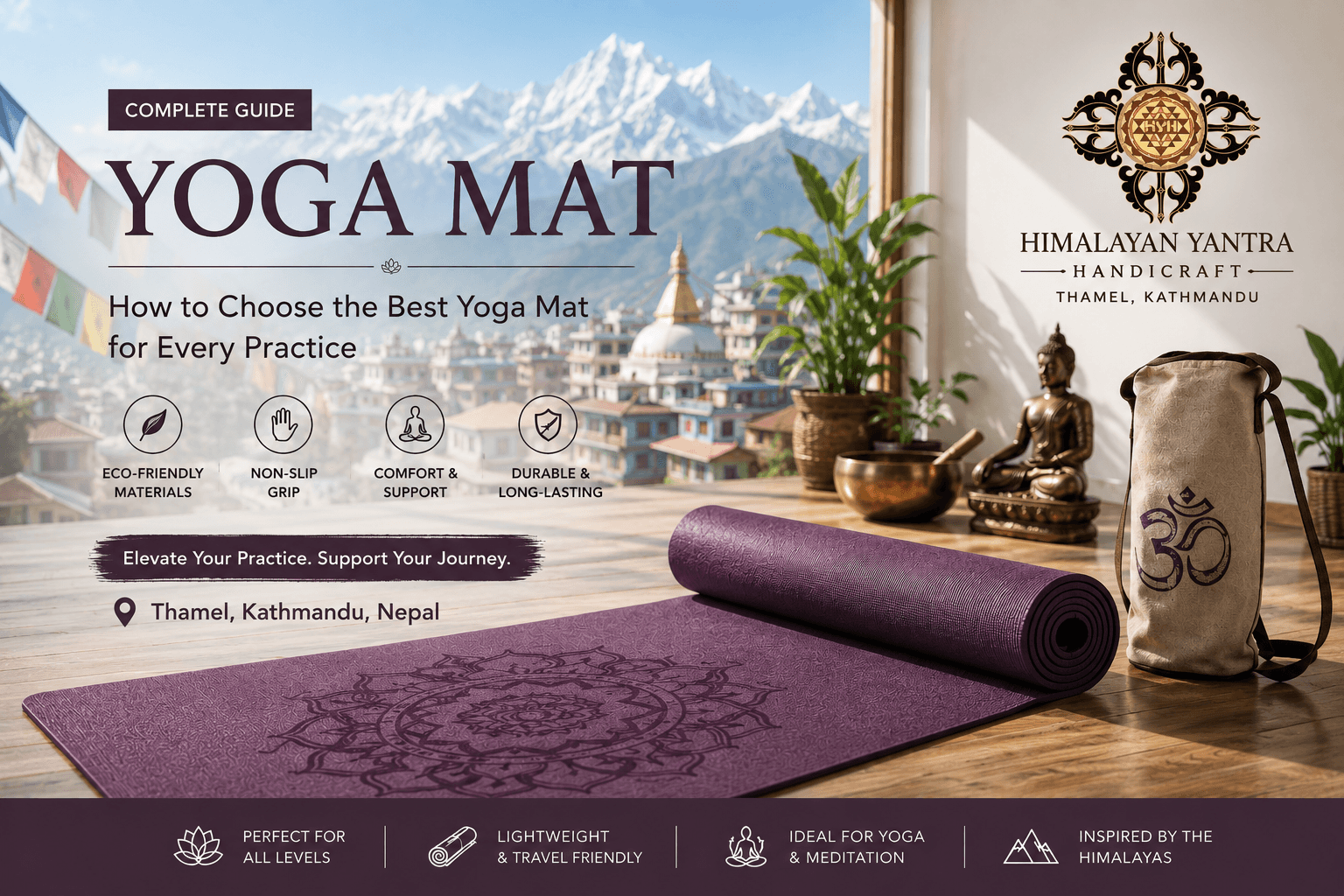
Yoga Mat: How to Choose the Best Yoga Mat for Every Practice
If you want a high-quality yoga mat in Nepal, then Himalayan Yantra Handicraft in Thamel, Kathmandu, sells yoga accessories that have been carefully chosen to reflect Himalayan traditions. Regardless of whether you are a complete beginner or an experienced yogi, deciding on a good yoga mat is the first move towards having a safe and comfortable practice.
It makes no difference whether you're just starting to do yoga or have been at it for years; the one piece of equipment that matters more than any other is the yoga mat.
A good yoga mat offers stability, comfort, a sense of balance, and confidence during your practice. Whether you're doing gentle Yin Yoga or intense Vinyasa Flow, the appropriate yoga mat improves each pose at the same time as protecting your joints and lowering the chance of slipping.
This complete guide will show you all the information you need to consider when purchasing a yoga mat, covering the different materials, thickness, grip, sustainability, maintenance, and expert recommendations.
What makes a yoga mat important?
A yoga mat is not just an accessory; it forms the basis of your practice. Those people who go to Thamel in Kathmandu often buy their yoga accessories from Himalayan Yantra Handicraft, a shop that places importance on quality, durability, and traditional craftsmanship as well as on modern yoga essentials.
Unlike exercising directly on the floor, a yoga mat provides:
- Better grip during standing poses
- Joint cushioning
- Improved balance
- Hygienic personal space
- Comfort for meditation
- Better alignment
- Reduced slipping
A yoga mat of good quality ensures consistency and safety whether the practice takes place at home, in a studio, or outdoors.
Benefits of Using a Quality Yoga Mat
1. Better Grip
A major benefit is that it stops your hands and feet from slipping. This becomes especially important during the following:
- Downward Dog
- Warrior II
- Triangle Pose
- Plank
- Crow Pose
Because it has a textured surface, a yoga mat provides better traction so that you can concentrate on maintaining proper alignment rather than being concerned about slipping.
2. Protects Your Joints
Yoga regularly has the knees, elbows, hips, and wrists in contact with the floor. A properly cushioned yoga mat protects
- Knees
- Spine
- Ankles
- Elbows
- Tailbone
This is particularly useful for beginners and for those who are older.
3. Improves Stability
A good balance starts with a solid foundation. Using a high-end yoga mat helps keep your feet firmly on the ground, which makes it easier to perform balancing poses.
Examples include:
- Tree Pose
- Eagle Pose
- Half Moon Pose
- Dancer Pose
4. Sets up a personal space for practice
Laying out your yoga mat means that your mind knows it's time to begin the practice.
This simple habit promotes consistency and helps to foster mindfulness.
At Himalayan Yantra Handicraft, you can look around for yoga mats that are suitable for meditation, Hatha Yoga, Vinyasa Yoga, and everyday wellness practices.
Types of Yoga Mats
Yoga mats are not all the same. If you prefer natural rubber, cork, cotton, or TPE, Himalayan Yantra Handicraft in Thamel, Kathmandu, has a variety of yoga accessories for different kinds of practice.
The right type to choose will vary according to the way you practice.
PVC Yoga Mats
Advantage
- Affordable
- Durable
- Soft
- Good grip
Disadvantages:
- Less eco-friendly
Best for:
- Beginners
- Studio classes
Natural Rubber Yoga Mats
Advantages:
- Excellent grip
- Eco-friendly
- Long-lasting
Disadvantages:
- Heavier
- Latex allergy concerns
Best for:
- Hot Yoga
- Vinyasa
- Power Yoga
Cork Yoga Mats
Advantages:
- Naturally antimicrobial
- Sustainable
- Excellent grip when wet
Best for:
- Hot Yoga
- Eco-conscious yogis
TPE Yoga Mats
Advantages:
- Lightweight
- Recyclable
- Comfortable
Best for:
- Travel
- Beginners
Cotton Yoga Rugs
It is commonly used in traditional yoga schools in India and Nepal.
Best for:
- Ashtanga Yoga
- Meditation
- Mysore Practice
Choosing the Right Thickness
It is common for experienced yoga instructors to go to reliable wellness shops such as Himalayan Yantra Handicraft in order to look at yoga mats face to face before making a long-term commitment.
2 mm
Best for:
- Travel
- Experienced practitioners
Pros:
- Lightweight
- Portable
4–5 mm
The most popular thickness.
Ideal for:
- Home practice
- Studio classes
- General yoga
It strikes the ideal balance between comfort and stability.
6–8 mm
Recommended for:
- Knee pain
- Seniors
- Restorative Yoga
- Offers extra cushioning.
Best Yoga Mat by Yoga Style
| Yoga Style | Recommended Mat |
| Hatha Yoga | 4–5 mm |
| Vinyasa Yoga | High-grip rubber mat |
| Ashtanga Yoga | Cotton rug or rubber mat |
| Yin Yoga | Thick cushioned mat |
| Restorative Yoga | Extra-thick mat |
| Hot Yoga | Cork or natural rubber |
| Power Yoga | Sweat-resistant grip mat |
Features to Look For
Excellent Grip
- Grip must stay reliable even when the hands are sweaty.
Cushioning
- Make sure there is adequate padding without affecting the balance.
Durability
- A good yoga mat should be able to last for many years of daily use.
Eco-Friendly Materials
Many practitioners now prefer the following:
- Natural rubber
- Cork
- Organic cotton
- Recyclable TPE
They lessen the environmental impact.
Non-Toxic Construction
Choose mats free from:
- Phthalates
- Latex (if allergic)
- Heavy metals
- Harmful dyes
Standard Yoga Mat Sizes
Most mats measure:
Length:
- 180–183 cm
Width:
- 61 cm
Practitioners who are tall might prefer mats that are extra long (200 cm).
How frequently should you replace your yoga mat?
Replace your yoga mat when:
- Grip wears out
- Surface peels
- Cracks appear
- It no longer lies flat
- Odor persists despite cleaning
People who use the mat frequently should replace it every 1 to 3 years, while those who use it only occasionally can usually keep the same mat for several years if they look after it properly.
How to Clean Your Yoga Mat
Looking after your yoga mat properly will help to maintain its quality, whether the mat is one of those sold by Himalayan Yantra Handicraft in Thamel, Kathmandu. If you keep your yoga mat clean, this will not only increase its lifespan but also improve hygiene.
After Every Practice
- Wipe with a damp cloth
- Let it air-dry completely
Weekly Cleaning
Use a gentle solution of:
- Water
- Mild soap
- White vinegar (optional)
Do not use chemicals that are harsh, as they could harm the surface. You should not store a rolled-up damp mat since moisture may cause odours or mould.
Common Mistakes When Buying a Yoga Mat
Avoid these mistakes:
- Buying the cheapest option without checking grip
- Choosing a mat that's too thick for balance work
- Ignoring the material
- Overlooking portability if you travel often
- Purchasing without considering your yoga style
Best Yoga Mat for Beginners
Beginners visiting Nepal often stop by Himalayan Yantra Handicraft to receive guidance on selecting the most suitable yoga mat for their first practice
Beginners should prioritize:
- 4–5 mm thickness
- Good grip
- Lightweight design
- Easy maintenance
- Affordable price
A mat that is both comfortable and supportive helps to build confidence and consistency right from the first day.
Yoga Mat vs. Exercise Mat
Even though they may look the same, they have different purposes.
Yoga Mat
- Better grip
- Thinner
- Stable
- Designed for balance and flexibility
Exercise Mat
- Softer
- Thicker
- Better for fitness workouts and floor exercises
- Less suitable for standing yoga poses
Eco-Friendly Yoga Mats
Sustainability is growing in importance among people who practice yoga. In order to support this trend, Himalayan Yantra Handicraft provides products that are eco-conscious and match the ideas of mindful living and responsible buying. Among the environmentally friendly choices are:
- Natural rubber
- Cork
- Organic cotton
- Jute
- Recycled TPE
They have a reduced effect on the environment yet provide outstanding performance.
How Your Yoga Mat Supports Mindfulness
A yoga mat offers more than just comfort.
For many practitioners, it becomes the following:
- A place for daily meditation
- A space for breathwork
- A reminder of personal growth
- A symbol of discipline
- A sanctuary for self-care
All practices start by merely unrolling the mat.
Frequently Asked Questions
What is the best thickness to have for a yoga mat?
- For the average person, a thickness of 4 to 5 mm provides the best combination of comfort and stability.
What yoga mat provides the best grip?
- It is usually the natural rubber and cork mats that offer the best grip, in particular when the sessions involve sweating.
Is it worth paying for yoga mats?
- Premium mats tend to last longer, offer better grip, and are able to keep up their performance after years of regular use.
Is it possible for someone who is a beginner to use a thin yoga mat?
- Certainly, but the majority of people who are just starting out find mats that are of medium thickness (4 to 5 mm) to be more comfortable and supportive.
How long does a yoga mat last?
- A good yoga mat will usually last between 1 and 5 years if it is looked after, the exact duration depending on how it is used and the material it is made from.
The selection of the right yoga mat is an investment in your health, your comfort, and in your future yoga practice. When you are travelling in Nepal or reside in the capital, a visit to Himalayan Yantra Handicraft in Thamel, Kathmandu, gives you the opportunity to look at high-quality yoga accessories and to experience the core of Nepal's wellness community. A good yoga mat offers stability, confidence, and comfort over many years of mindful practice.